
Species comparisons
Mammoth vs Mastodon: Teeth, Diet, Size & Differences
Published · Editorial policy
The short answer
Mammoths and mastodons were different elephant relatives. Mammoths belong to Mammuthus and had ridged grinding teeth; American mastodons belong to Mammut and had more prominent cusps suited to processing woody vegetation. A woolly mammoth is one mammoth species, not another name for every Ice Age elephant relative.
| Feature | Mammoths | American mastodon |
|---|---|---|
| Genus | Mammuthus | Mammut |
| Molar surface | Repeated enamel ridges | Prominent cusps |
| Typical feeding contrast | Grazing, especially in woolly mammoths | Browsing woody vegetation |
| Living elephant relationship | Same family: Elephantidae | Separate family |
Different branches of the elephant family tree
Mammuthus and Mammut are confusingly similar names for distinct genera. Mammoths belong to Elephantidae alongside living elephants; mastodons belong to a separate extinct family. Their shared trunks and tusks reflect a broader relationship within proboscideans, not membership of the same species. In North American comparisons, mastodon usually means the American mastodon, Mammut americanum. This guide uses that comparison while keeping woolly mammoths distinct from other mammoth species.
Teeth are more reliable than a shaggy outline
A mammoth molar presents a series of enamel ridges across a grinding surface. Mastodon molars have high, separate cusps, the feature behind their name. These contrasting chewing surfaces are useful when identifying fragmentary fossils, whereas a woolly outline in an illustration is not a diagnostic specimen. Tooth wear and the position of a tooth in the jaw matter, so an isolated worn fragment still needs careful comparison with described material.
Grazing and browsing describe tendencies
Woolly mammoths are strongly associated with open northern environments and a diet including grasses and sedges. Mastodons are commonly associated with browsing on leaves, twigs and other woody vegetation. These are useful ecological contrasts, not rules that every individual ate only one plant type. Fossil teeth indicate feeding adaptations; reconstructing an actual diet also benefits from preserved plant remains, tooth wear and local environmental evidence.
Size and extinction need a named population
The answer to which was bigger depends on the mammoth species, sex and individual being compared. Do not substitute the largest mammoth estimate for an average woolly mammoth. Likewise, a shared Ice Age label does not give all populations one extinction date. The last woolly mammoth populations have their own history; American mastodon disappearance is a separate question. Use the linked mammoth extinction guide for that timeline instead of merging the two animals into one event.
What remains uncertain
Body mass, coat appearance and diet vary among species and individuals. Dental differences are identification tools; simplified silhouettes and maximum-size graphics should not replace specimen evidence.
Related questions
Were all mammoths woolly?
No. The woolly mammoth, Mammuthus primigenius, is one species in Mammuthus. Other mammoths had different ranges and adaptations. A general mammoth claim needs to specify the species when the distinction matters.
Is a mastodon a type of mammoth?
No. Mastodons and mammoths are separate proboscidean lineages. Their similar appearance explains the common confusion, but their molars and evolutionary relationships distinguish them.
Sources & further reading
Meet the species
Keep exploring
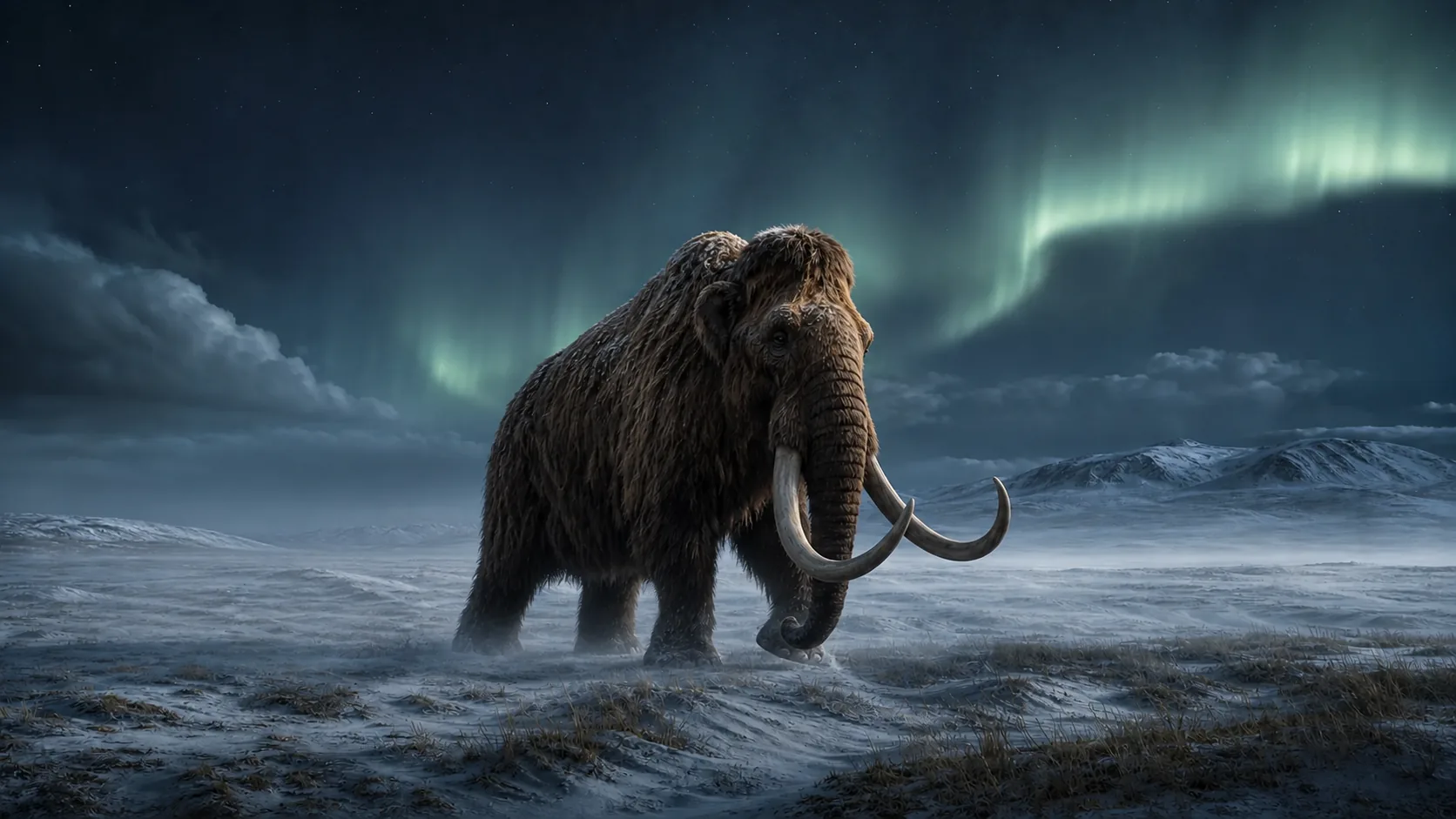
Why did woolly mammoths go extinct?
Climate, human pressure and the last island populations.
Read the answer ↗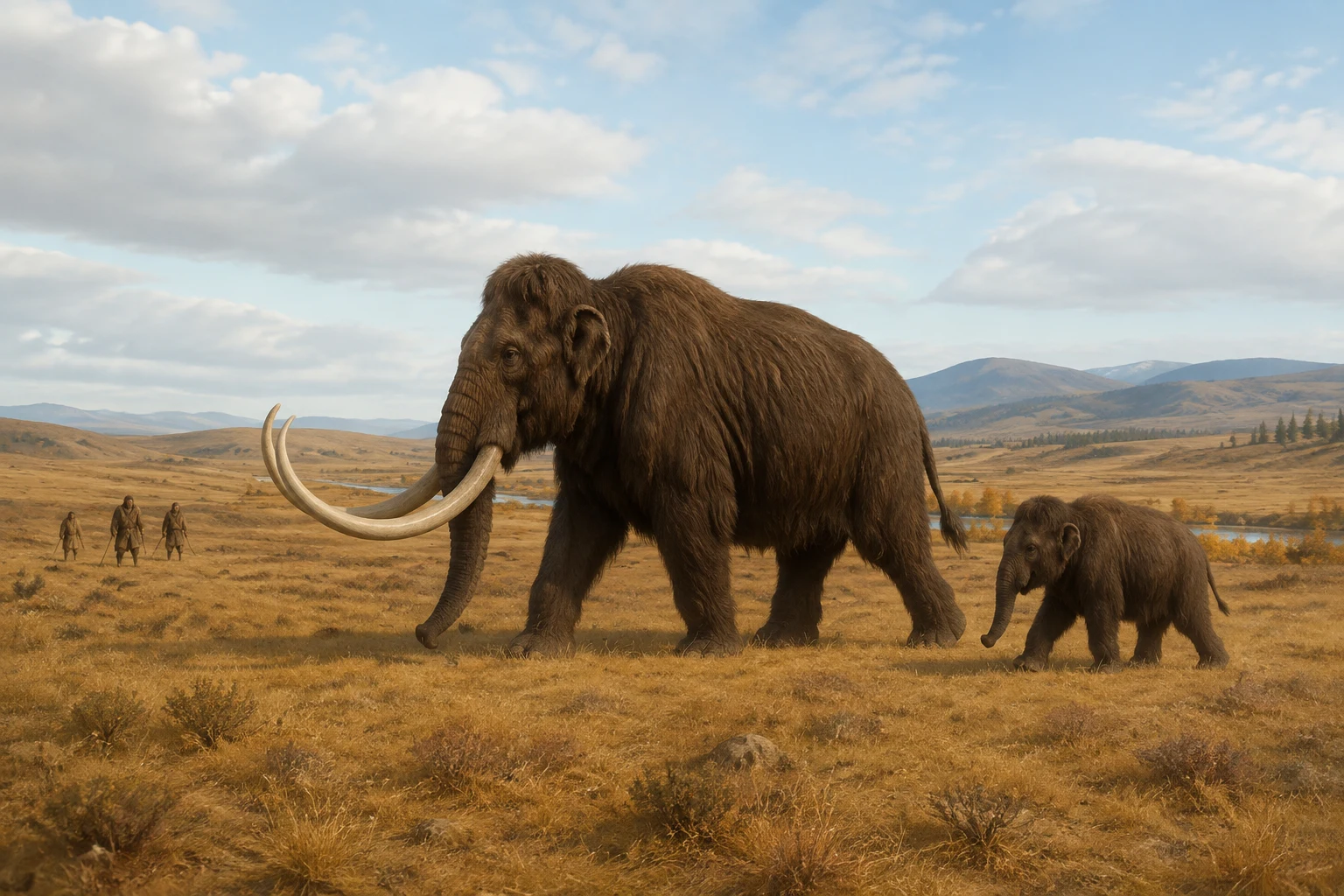
Did humans live with mammoths?
Yes. People shared Ice Age landscapes with mammoths and sometimes hunted them. Archaeological sites and prehistoric art document that relationship. Some isolated mammoth populations survived until about 4,000 years ago. Sharing a time period, however, does not mean people encountered every population or caused every local extinction.
Read the answer ↗
Can extinct animals be brought back?
Partly. Cloning can sometimes recover an individual from preserved cells, while breeding and gene editing can reconstruct selected traits. Neither achievement automatically restores an extinct species as a healthy, reproducing wild population.
Read the answer ↗