Extraordinary adaptations
Armored Dinosaurs: Plates, Spikes & Tail Clubs
Explore five armoured dinosaur examples and compare how their bony coverings differed. Stegosaurus plates, Ankylosaurus tail clubs and Sauropelta shoulder spines were not interchangeable versions of the same structure.
Explore the animals 5 ↘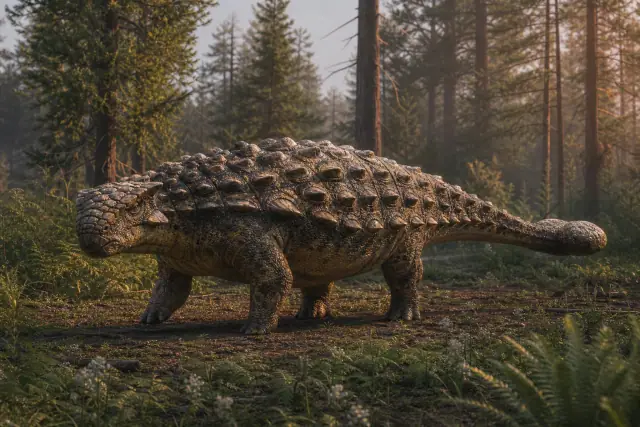
How this list was selected
The selection follows thyreophoran anatomy, including stegosaurs, ankylosaurs and an earlier relative. These plant-eating dinosaurs developed osteoderms: bones formed within the skin. Horned dinosaurs are not included just because their skulls look defensive. Nor is every animal with a shell a dinosaur. The ordering compares body plans rather than armour strength, which cannot be reduced to one reliable score from fossil shape alone.
Did all armoured dinosaurs have tail clubs?
No. A tail club combines specialised tail vertebrae with an enlarged bony end. It is characteristic of some ankylosaurs, not all thyreophorans. Stegosaurs carried tail spikes, and nodosaurids such as Sauropelta lacked the familiar ankylosaurid club. A defensive structure can also have display or social functions; fossils do not record a single universal purpose.
In this guide 5
Explore the animals
5 atlas records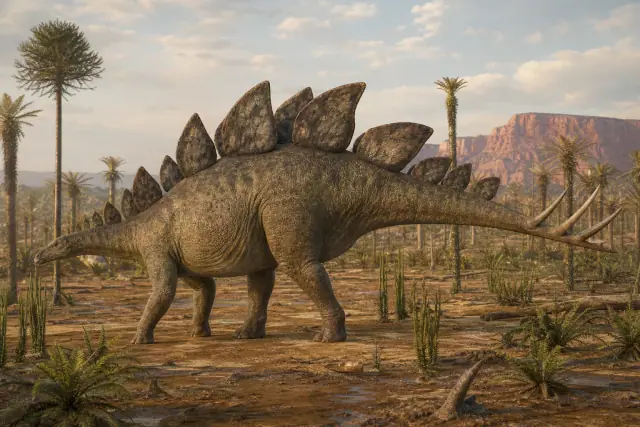
About 155–145 million years ago
Stegosaurus
Stegosaurus stenops
Large upright plates ran along the back, with spikes near the tail tip. The thin, vascular plates should not be imagined as a solid shield covering the torso. Their function remains debated, while the tail spikes provide a separate anatomical question about defence and movement.
Western North America
Natural History Museum · stegosaurus ↗About 68–66 million years ago
Ankylosaurus
Ankylosaurus magniventris
A low body carried extensive bony armour and a specialised clubbed tail. Its famous silhouette belongs to a Late Cretaceous animal, much later than Stegosaurus. Reconstructing the club's force requires assumptions about muscles, tail motion and the particular individual's size.
Western North America
Natural History Museum · ankylosaurus ↗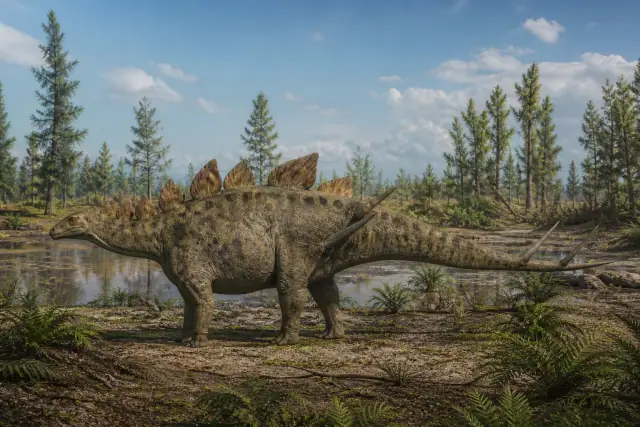
About 152–145 million years ago
Kentrosaurus
Kentrosaurus aethiopicus
This Tanzanian stegosaur combined plates and prominent spikes. Comparing it with Stegosaurus reveals diversity within the stegosaur branch, rather than a simple progression toward one best armour design. Museum mounts combine preserved material with reconstruction decisions that should be checked against the fossil description.
Seasonal river plain · Tanzania
Museum für Naturkunde · Tendaguru collection ↗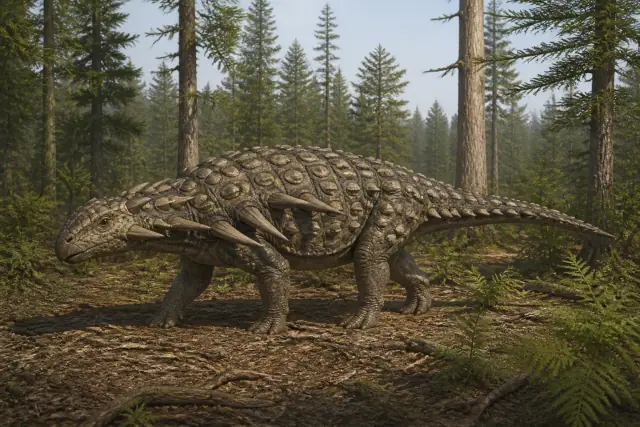
About 115–108 million years ago
Sauropelta
Sauropelta edwardsorum
Large shoulder spines and body armour distinguish this nodosaurid example. It lacked the familiar tail club of Ankylosaurus. Its inclusion is useful because the informal word ankylosaur can cover animals with noticeably different defensive equipment and evolutionary relationships.
River forests and open plains · North America
Natural History Museum · sauropelta ↗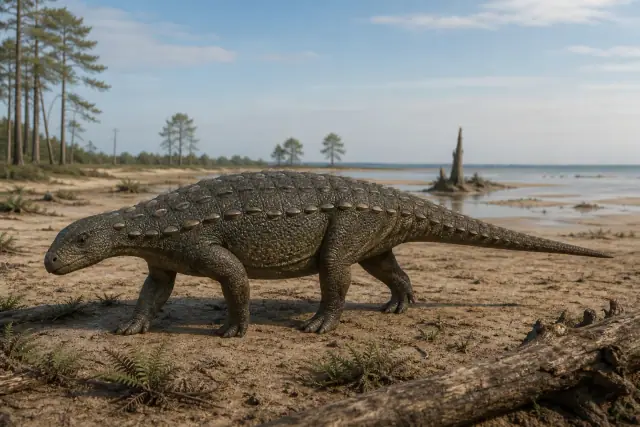
About 196–183 million years ago
Scelidosaurus
Scelidosaurus harrisonii
An early armoured dinosaur with rows of bony scutes, Scelidosaurus helps place the later giants in an evolutionary context. Its covering was neither a Stegosaurus-style array of huge plates nor an Ankylosaurus-style tail club. Early relatives matter when tracing how these structures diversified.
Coastal plain and estuary · Britain
Natural History Museum · scelidosaurus ↗