
Explore this animal in Size of Extinct Animals ↗
248 / Cenozoic
Thalassocnus
Thalassocnus natans
A sloth lineage with aquatic adaptations, including dense bones that could help control buoyancy.
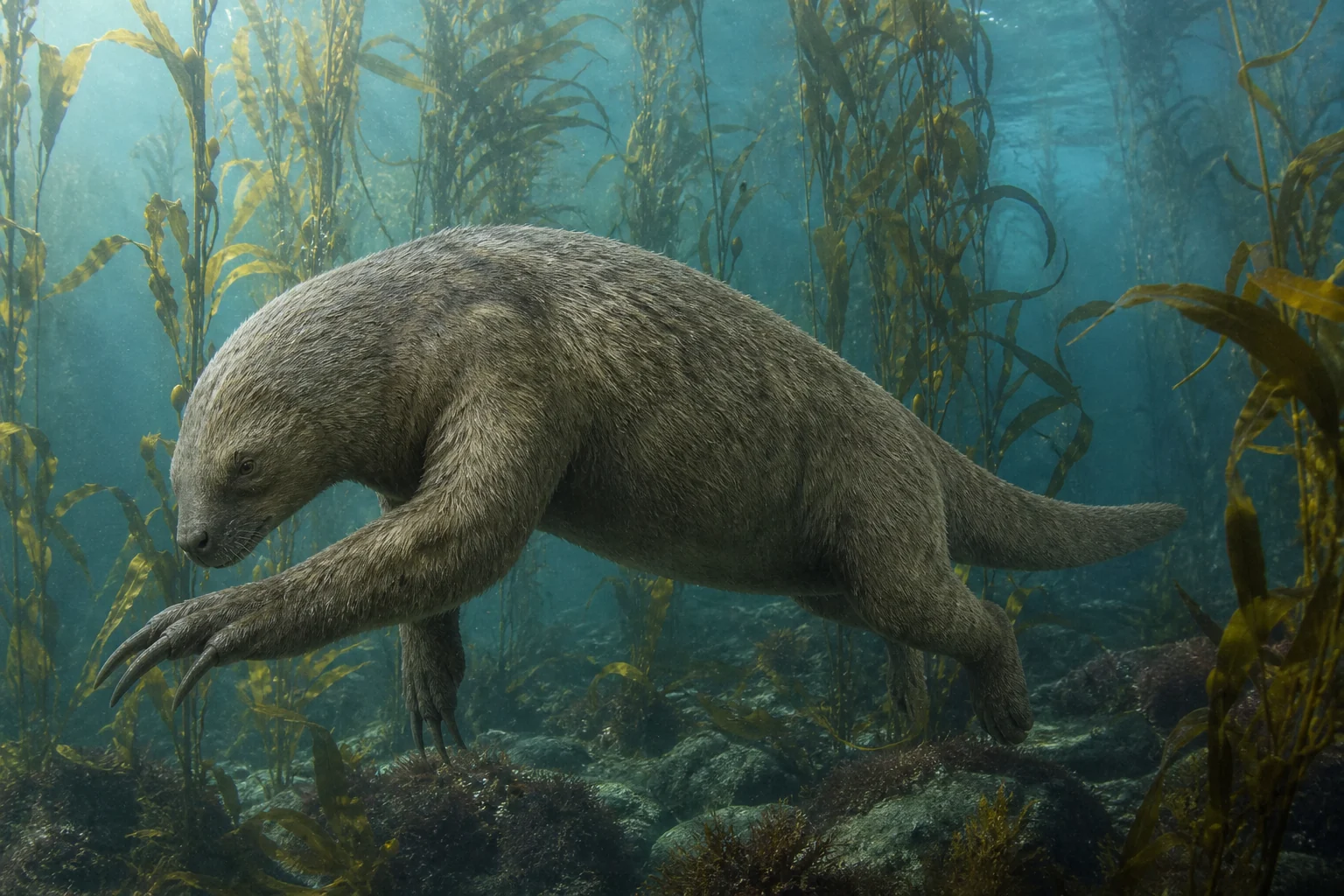 View original image · 1536 × 1024
- Time range
- Miocene–Pliocene; ages vary by species
- Final stage
- Pliocene; exact extinction date uncertain
- Geographic range
- Pacific seagrass and kelp beds · Peru and Chile
01 / ANSWER FIRST
What was Thalassocnus?
Thalassocnus was an extinct sloth genus with adaptations for life and feeding in water. T. natans is one of its named species; the different species were not equally aquatic.
The evidence combines marine fossil settings, feeding anatomy and internal bone structure. Finding a skeleton in marine rocks alone would not prove that an animal routinely fed underwater.
02 / QUICK FACTS
Thalassocnus at a glance
- Group
- Sloths · mammals
- Featured species
- Thalassocnus natans
- Age
- Miocene–Pliocene; varies by species
- Marine fossils
- Peru and Chile
- Likely food
- Vegetation, including marine plants
- Key adaptation
- Increased bone density in aquatic forms
03 / ANATOMY
What made an aquatic sloth different?
Dense internal bone
Amson and colleagues (2014) measured increasing bone compactness in the sampled species. Extra bone mass can counter buoyancy, helping an animal remain submerged.
Thicker bones
Some later forms also had swollen bones. Density and external thickness are different measurements; both contribute to the amount of bone in the skeleton.
Changes beyond the limbs
A 2018 study found bone-mass increases in the skull, including nasal structures. Some changes may reflect a whole-skeleton response rather than an independent advantage for every structure.
04 / DIET & BEHAVIOUR
What did Thalassocnus eat?
The 1995 description proposed feeding on seagrasses or seaweeds. A 2004 analysis of jaws and teeth distinguished earlier mixed feeders, including T. natans, from later, more specialised grazers.
05 / DIET & BEHAVIOUR
Did every species live the same way?
No. Differences in bones and feeding anatomy indicate different degrees of aquatic adaptation. A sea-bottom feeding reconstruction should not be applied unchanged to every member of the genus.
06 / RANGE & HABITAT
Where did Thalassocnus live?
Its best-studied aquatic records come from the Pacific side of South America. A 2025 review also notes material from terrestrial deposits in Argentina, so the whole genus should not be described as known only from marine rocks.
Pisco Formation, Peru
Fossils from this marine succession supplied the classic comparisons of aquatic adaptations among species.
Bahía Inglesa Formation, Chile
The 2025 study described a nearly complete T. natans skeleton from Norte Bahía Caldera and supported a late Miocene age for that material.
07 / FOSSIL EVIDENCE
What changed in the 2025 interpretation?
An observed bone trend
The anatomical studies document differences in compactness and shape. These are measurements of fossils, separate from a proposed family tree.
Overlapping species ranges
Valenzuela-Toro and colleagues found that revised age ranges overlap. This weakens a simple succession in which one named species turns directly into the next; it does not erase the aquatic adaptations.
08 / DISAPPEARANCE & DEBATE
When did Thalassocnus disappear?
The 2025 review identifies Upper Pliocene remains in central Chile as the youngest known genus record. An exact extinction date and cause remain uncertain.
The last fossil occurrence is evidence of survival at that time, not a witnessed extinction event.
09 / FREQUENTLY ASKED QUESTIONS
Thalassocnus FAQ
Was Thalassocnus a sea sloth?
That is a useful informal name. Fossils support aquatic adaptations, but their degree differed among species.
Is Thalassocnus natans the whole genus?
No. T. natans is one species. Conclusions about it should be distinguished from comparisons across other Thalassocnus species.
Why did it have dense bones?
Increased bone mass can help oppose buoyancy. Bone density supports aquatic adaptation but cannot tell us a precise dive depth or swimming speed.
04 / SOURCES & FURTHER READING
Check the source record
Use the scientific name to compare taxonomy, occurrence records and the fossil record. Database coverage and classifications may differ.
05 / REVISION HISTORY
How has this record changed?
- Expanded this profile with research sources, focused questions and explicit limits on reconstructions; updated search metadata.
- Verified authoritative entity sources and added three responsive reconstruction sizes.
- Initial bilingual species record published.
06 / CORRECTIONS & ADDITIONS