361Paleozoic
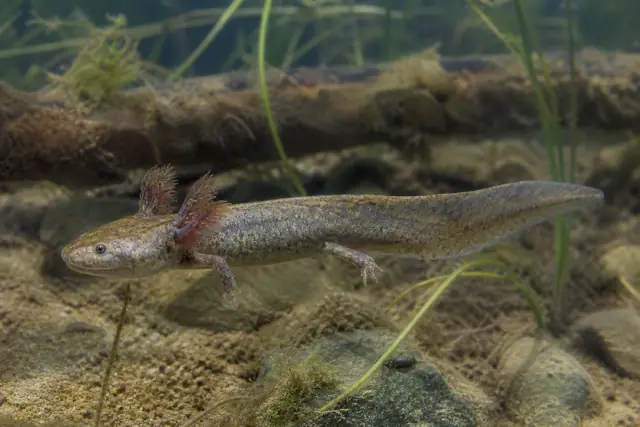
Branchiosaurus
Branchiosaurus salamandroides
Adults retained external gills, extending a juvenile condition through life.
 EXTINCT ATLASEXTINCT LIFE ARCHIVEBack to archive
Period · 358.86–298.9 million years ago
Browse giant arthropods, early amniotes and fossil plants from Carboniferous wetlands and forests.
Branchiosaurus salamandroides
Adults retained external gills, extending a juvenile condition through life.
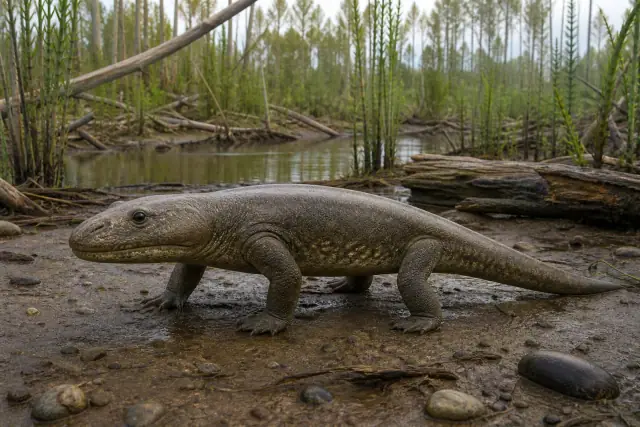
Pederpes finneyae
Forward-facing toes show an early tetrapod using a more effective terrestrial gait.
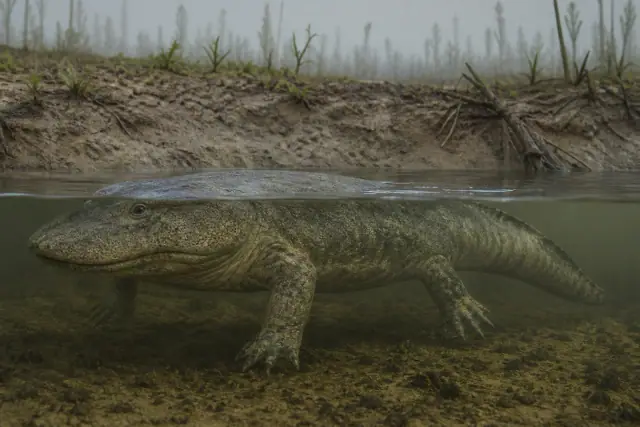
Whatcheeria deltae
A reinforced skull and fang-like teeth belonged to a powerful river predator.
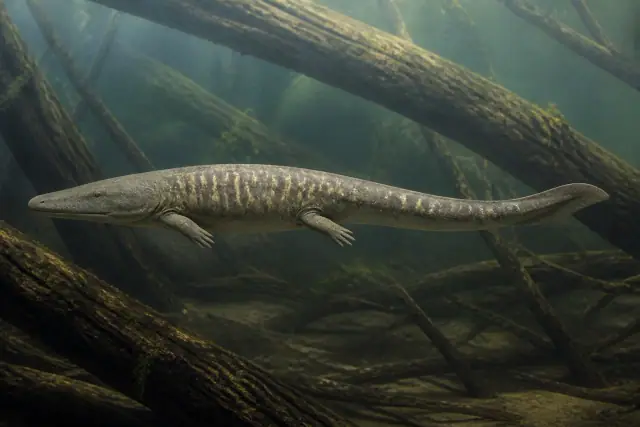
Greererpeton burkemorani
A long trunk and deep tail propelled it through murky water.
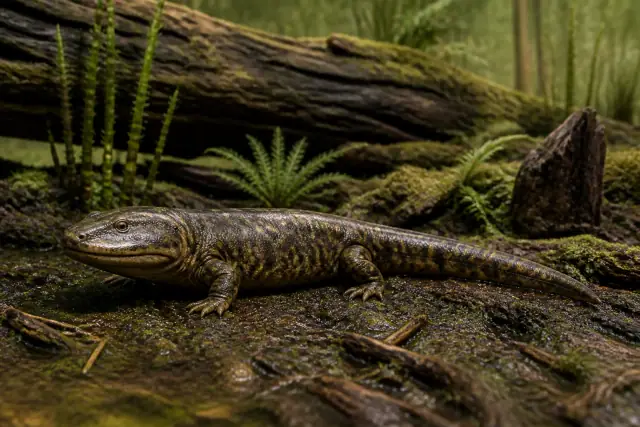
Balanerpeton woodi
The ear region and sturdy limbs suggest more terrestrial activity than in many contemporaries.
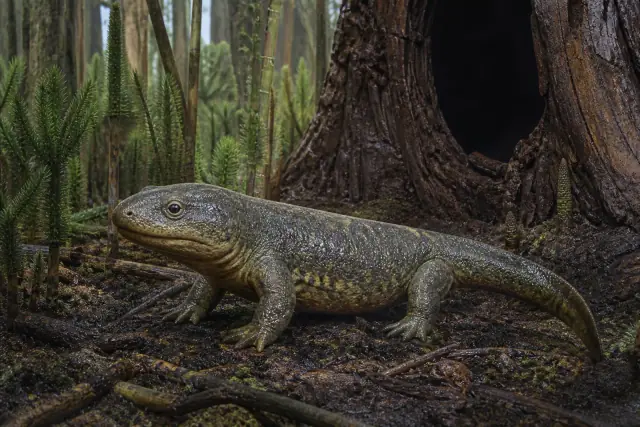
Dendrerpeton acadianum
Many individuals were entombed inside hollow tree stumps.
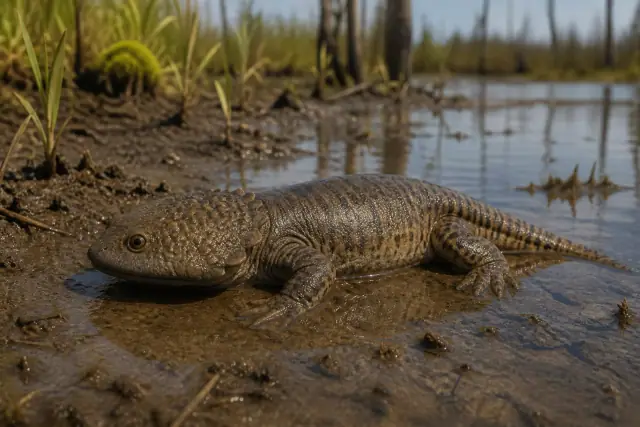
Zatrachys serratus
Its expanded skull margin bears bony projections; their function is unproven.
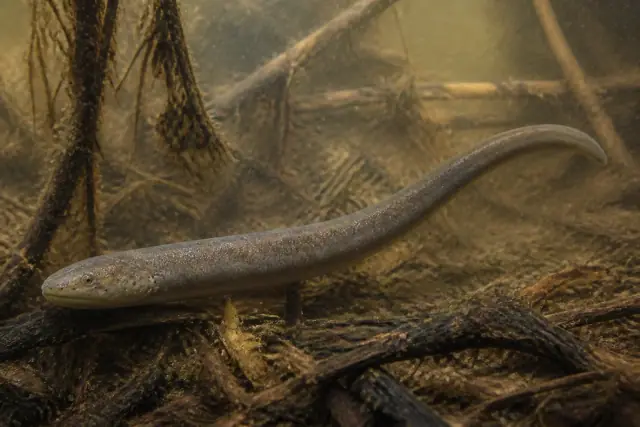
Adelospondylus watsoni
The limbs vanished entirely while the skull and spine retained tetrapod construction.
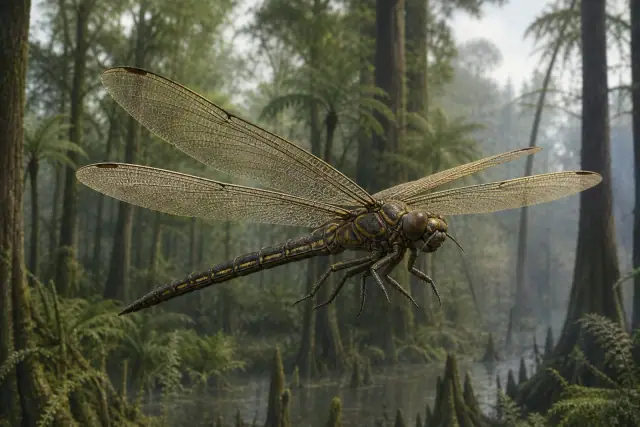
Erasipteron larischi
Broad net-veined wings carried an early aerial predator through oxygen-rich forests.
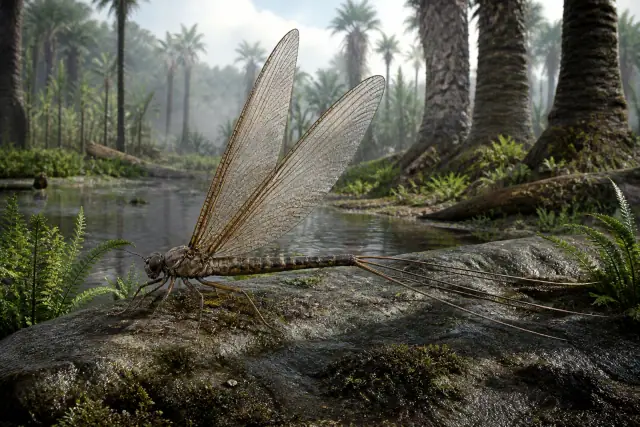
Bojophlebia prokopi
Huge triangular wings and long tail filaments belonged to a giant mayfly relative.
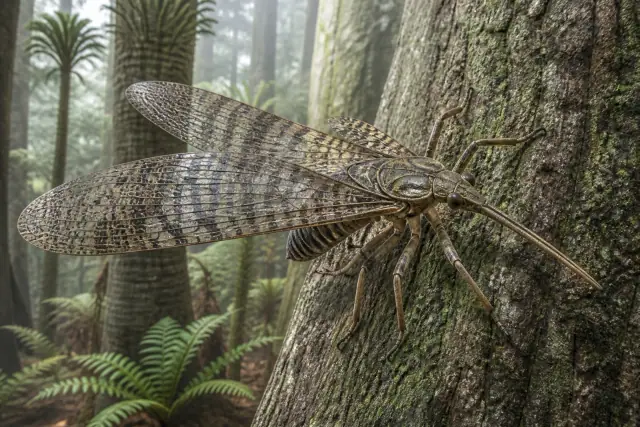
Homoioptera woodwardi
Thoracic winglets accompanied four large wings in an extinct flight architecture.
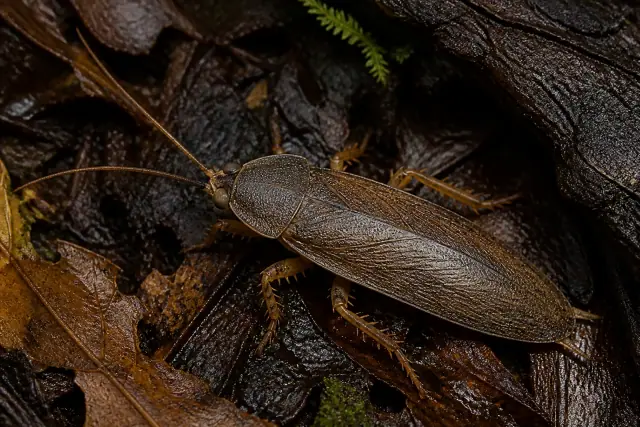
Archimylacris eggintoni
A shield-like pronotum and flat wings mark an early cockroach-mantis relative.
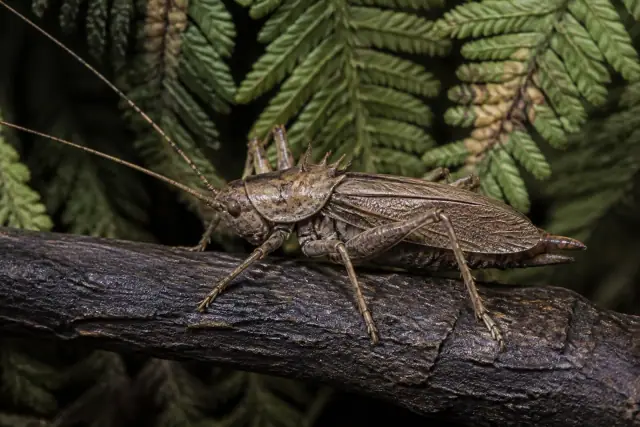
Gerarus danae
An enlarged prothorax carried a row of prominent spines.
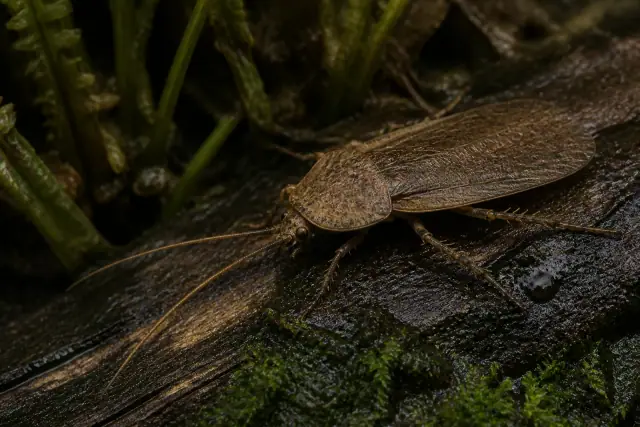
Qilianiblatta namurensis
Its wing venation pushes the cockroach-like pattern deep into the Carboniferous.
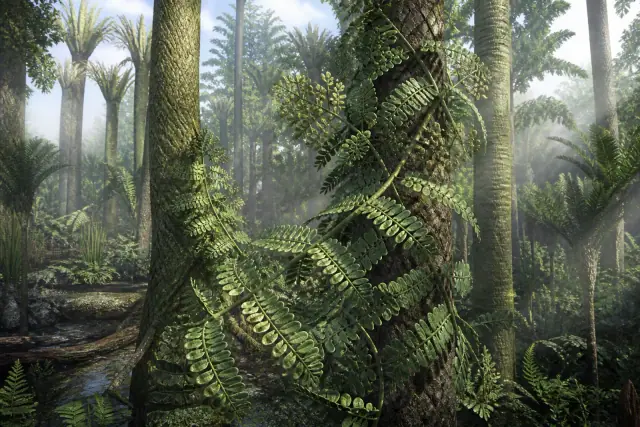
Alethopteris serlii
Firm fern-like pinnules belonged to a seed plant rather than a true fern.
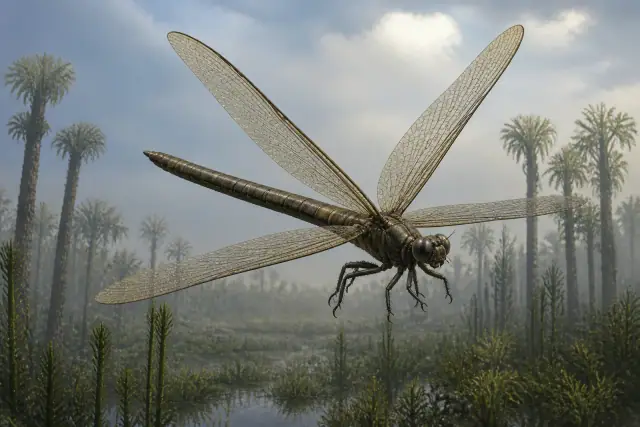
Megatypus schucherti
A wingspan near half a meter made it a major aerial predator.
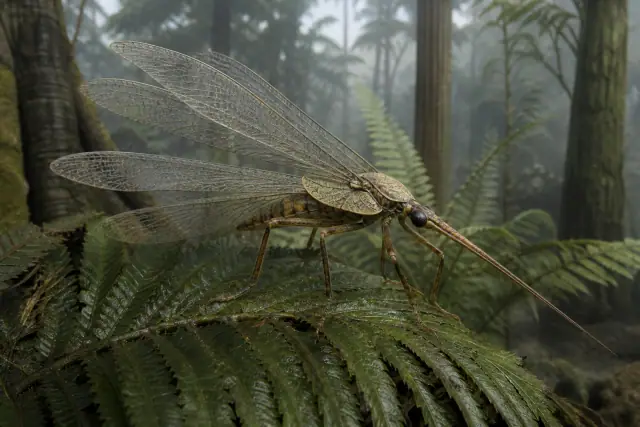
Lithomantis carbonarius
Leaf-like thoracic lobes accompanied four functional wings.
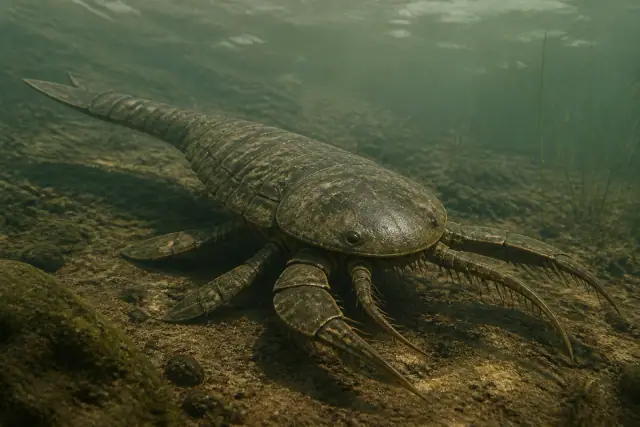
Hibbertopterus scouleri
A giant sea scorpion that raked soft sediment for food; a Scottish trackway suggests an animal about 1.6 m long.
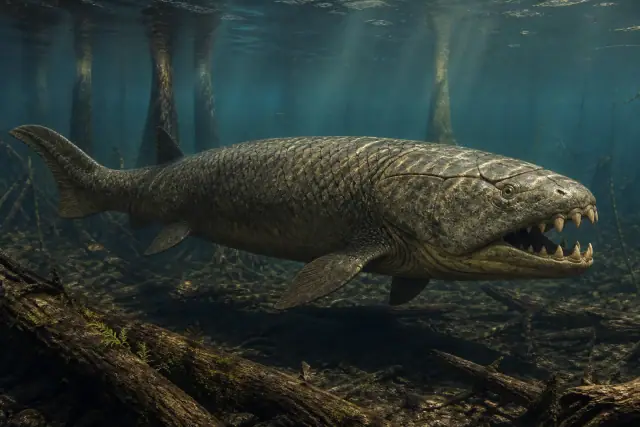
Rhizodus hibberti
Huge conical teeth armed a multi-meter freshwater lobe-finned predator.
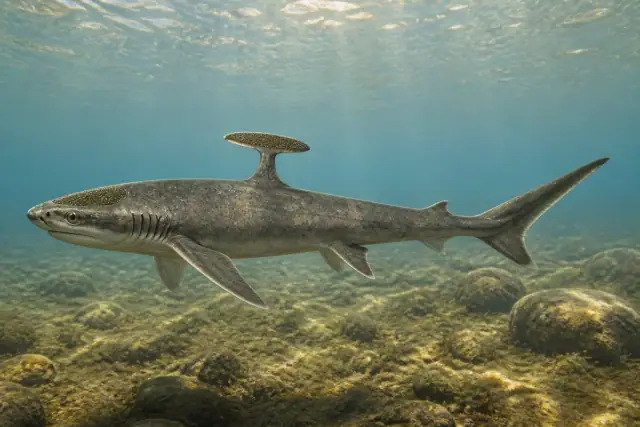
Stethacanthus altonensis
Males carried a denticle-covered anvil-shaped structure on the back.
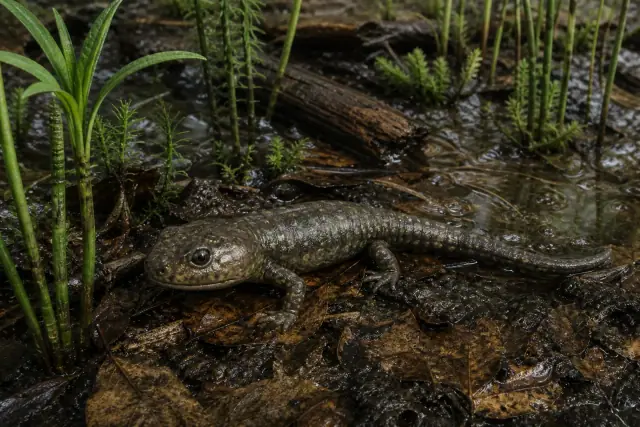
Amphibamus grandiceps
A small light body combined traits near the ancestry of modern amphibians.
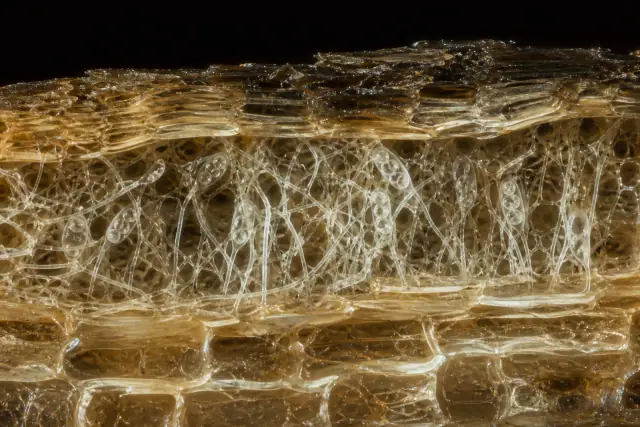
Protoascon missouriensis
Tiny sac-like structures in coal balls resemble an early ascomycete.
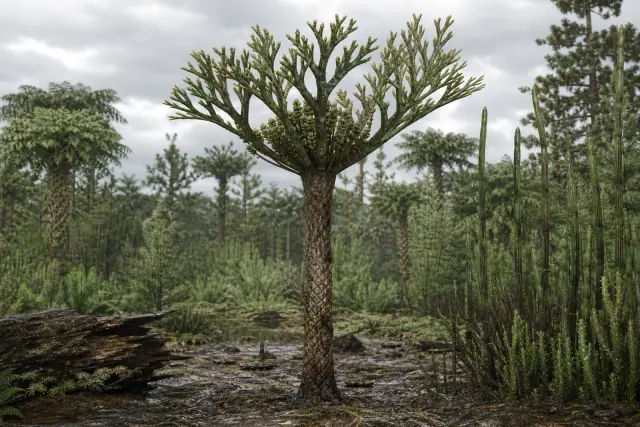
Noeggerathia foliosa
A palm-like crown belonged not to a fern but to an extinct heterosporous seed-plant relative.
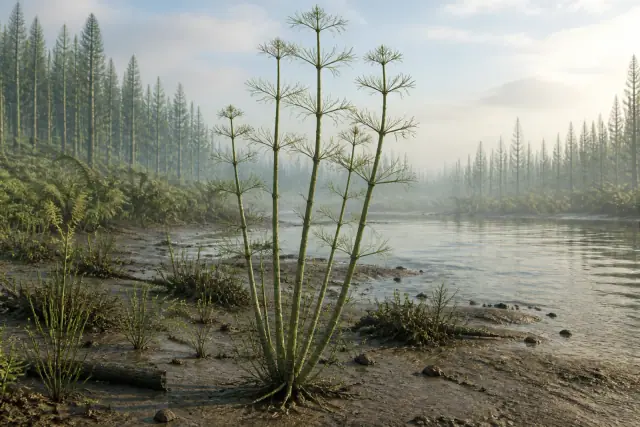
Archaeocalamites radiatus
Hollow jointed stems let an early horsetail relative grow as a tall shrub or small tree.