
Anatomy & classification
Did Dinosaurs Have Feathers? Fossils, Scales & Flight
Published · Editorial policy
The short answer
Yes. Fossils show feathers or feather-like filaments in several dinosaur lineages, and birds are living feathered dinosaurs. That does not mean every extinct dinosaur was covered in plumage. Preserved feathers, scales and attachment marks answer different questions about particular animals.
| Evidence | What it supports | What it cannot settle alone |
|---|---|---|
| Preserved feather impressions | Feather structure and location on a specimen | The complete covering of every individual |
| Quill attachment marks | Attachment of feathers to the forearm | Colour or the ability to fly |
| Skin and scale impressions | Scales on the preserved body region | The absence of feathers elsewhere |
What counts as direct feather evidence?
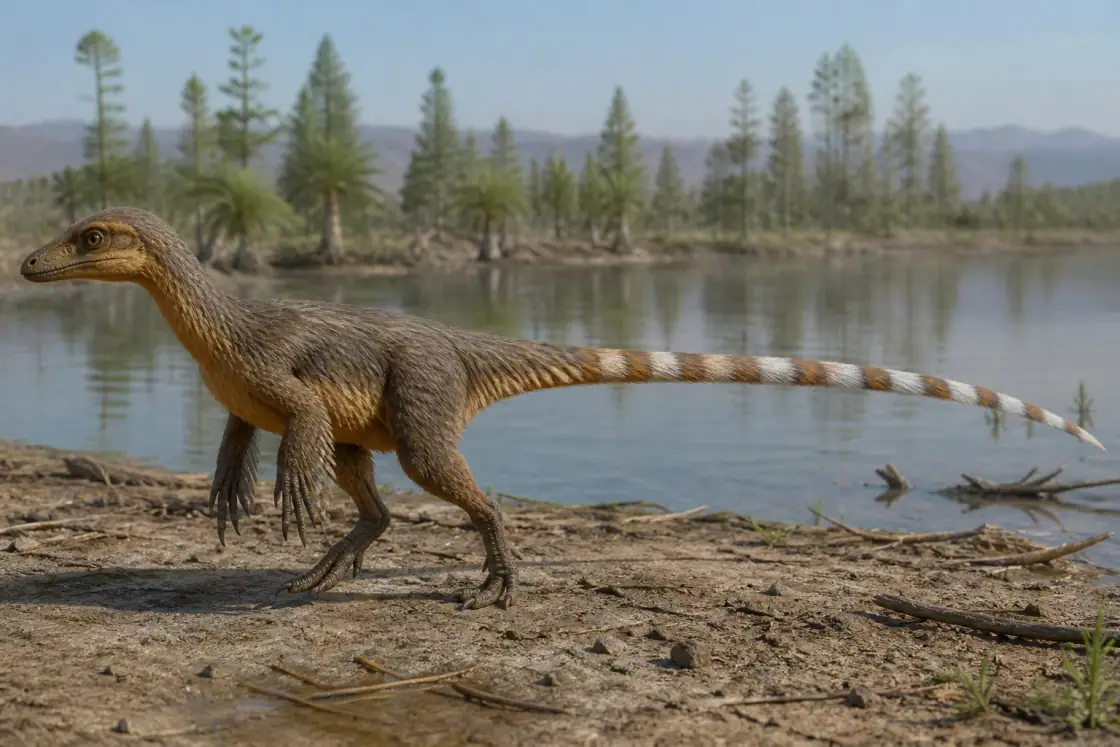
Some exceptionally preserved fossils retain outlines of structures that surrounded the living animal. Caudipteryx preserves feathers with a central shaft and vanes; Microraptor preserves long feathers on both forelimbs and hindlimbs. These are more informative than a reconstruction picture. Their location and structure can be examined on specimens, although decay and burial mean that the preserved covering need not show every body region.
Why is Velociraptor usually shown with feathers?
A published Velociraptor forearm bone has a row of quill knobs: attachment features associated with large feathers in living birds. This is anatomical evidence for feathers even though the feathers themselves were not preserved on that specimen. It supports feathered arms, rather than supplying a complete colour pattern or proving flight. A skeleton without visible quill knobs is not automatically evidence that its owner lacked feathers.
Did feathers evolve only for flight?
No. Non-flying dinosaurs such as Caudipteryx had elaborate feathers. Insulation, display and other functions are relevant to the evolution of body coverings, whereas powered flight also requires appropriate anatomy and performance. Microraptor’s feather arrangement helps researchers test aerial behaviour, but a fossil outline alone does not settle its take-off technique. Separate the presence of feathers from the additional evidence needed to reconstruct movement.
Did all dinosaurs have the same covering?
No universal coat has been demonstrated. Sinosauropteryx has simple filaments rather than the broad flight feathers of a modern wing. Other dinosaur fossils preserve scales, and the evolutionary origin and definition of the earliest feathers remain debated. A feathered relative helps frame a hypothesis, but it does not replace direct evidence for a particular species, life stage or body region. Birds document one surviving branch, not the appearance of the whole dinosaur family tree.
What remains uncertain
Soft tissues are preserved unevenly. Absence of a feather impression is not the same as evidence of bare skin, and interpretations of the earliest filamentous structures continue to change.
Related questions
Were feathered dinosaurs all birds?
No. Caudipteryx and Velociraptor are examples outside birds. Birds belong within theropod dinosaurs, so feathered dinosaurs include both birds and several extinct non-avian groups.
Does a feathered dinosaur automatically have wings?
No. Body filaments and a feathered arm are not interchangeable with a functional flight wing. Flight requires additional evidence about the shape, joints and performance of the animal.
Sources & further reading
Meet the species
Keep exploring
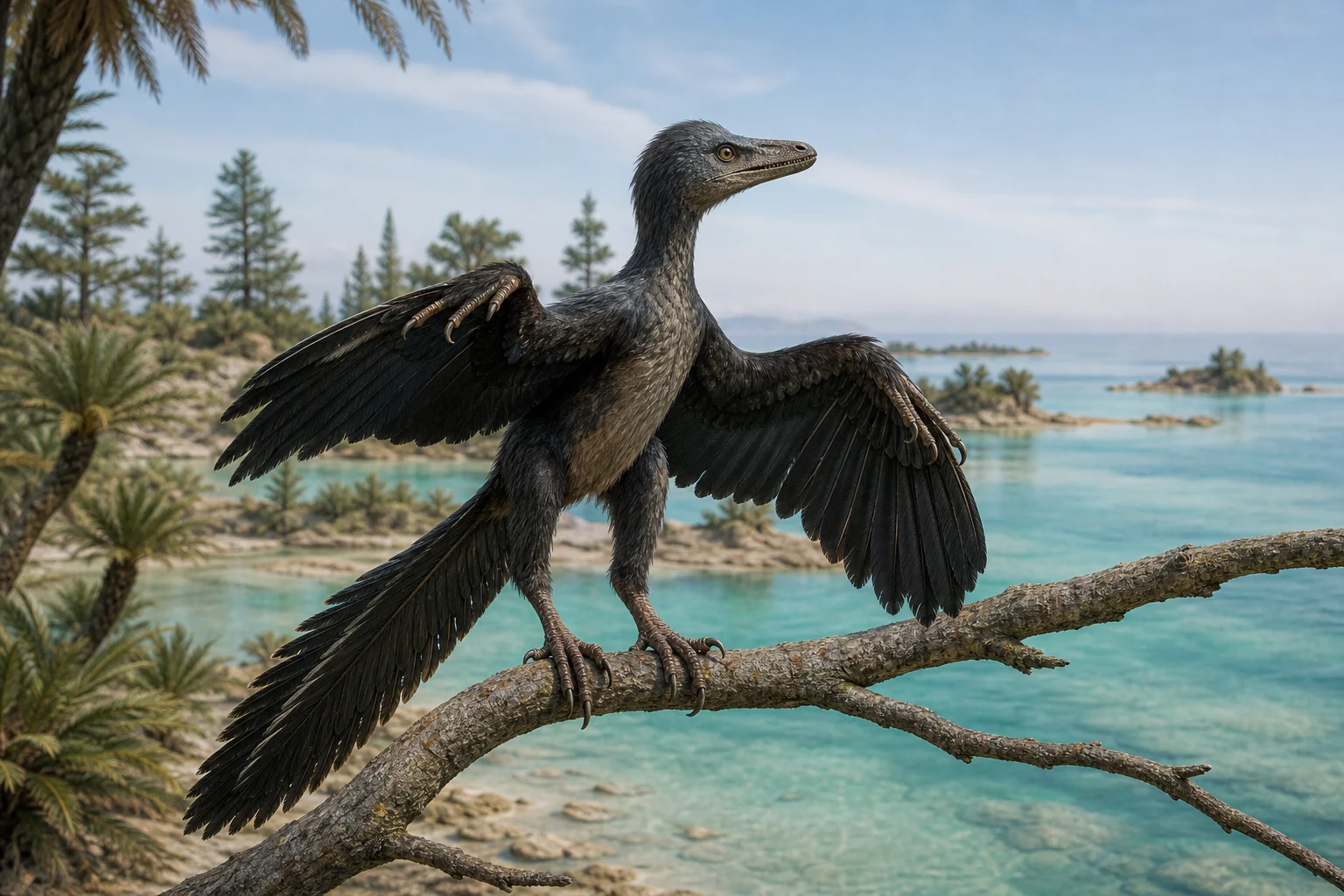
Why did birds survive the dinosaur extinction?
Birds are dinosaurs, and only some of their lineages survived the extinction about 66 million years ago. Small bodies, food options and less dependence on trees may have helped. Flight alone does not explain survival: many ancient birds disappeared too, and the relative importance of each factor remains debated.
Read the answer ↗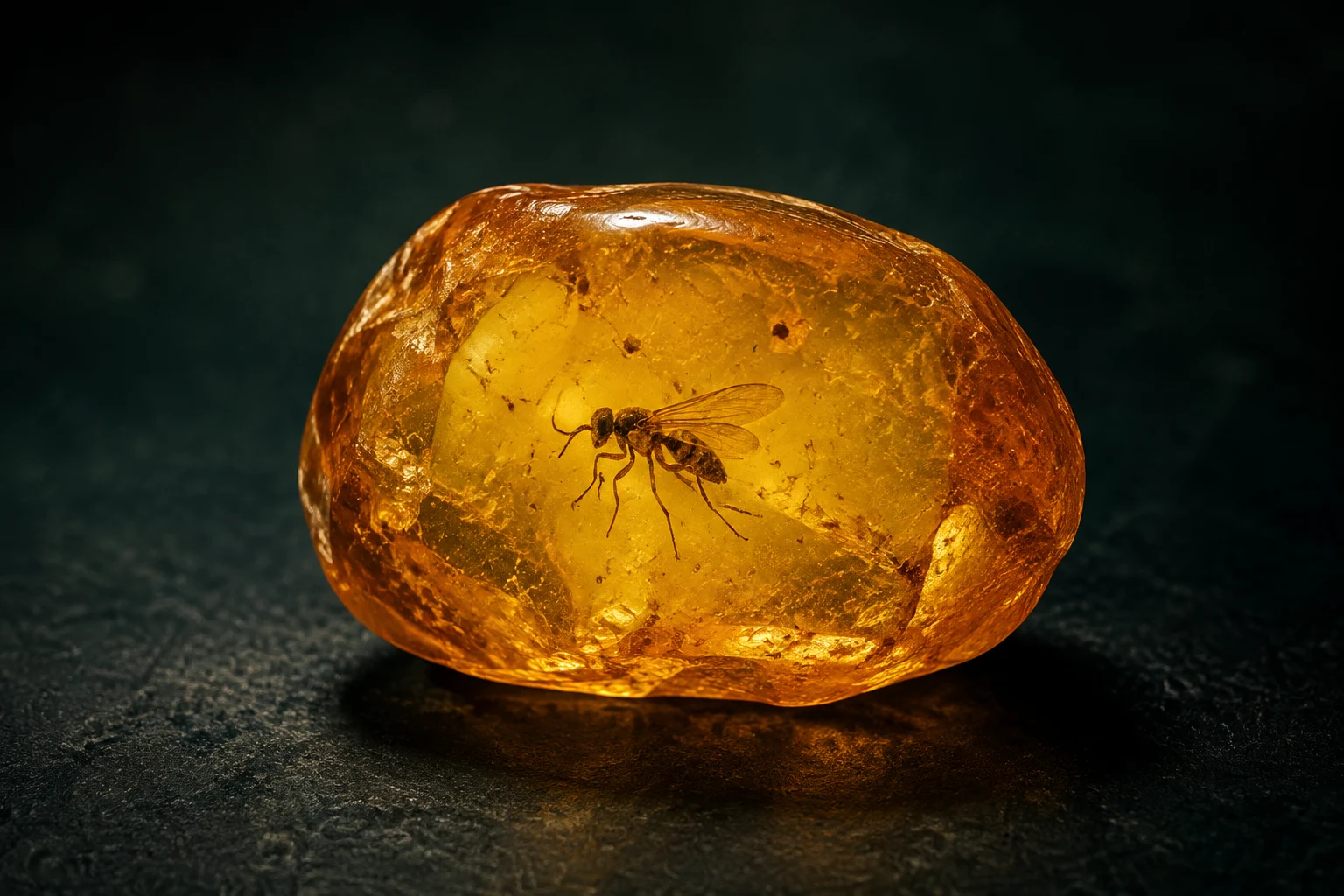
Could DNA from amber bring dinosaurs back?
No verified method currently provides a usable, complete non-avian dinosaur genome from amber. An insect can retain its shape after its DNA has degraded. Even a hypothetical complete sequence would not by itself provide the cells, embryo development and reproductive system needed to produce a living animal.
Read the answer ↗Prehistoric Animals Still Alive Today? Ancient Lineages Explained
Coelacanths, tuatara, horseshoe crabs and birds belong to ancient lineages. They are living, evolving species, not unchanged individuals or proof that extinct dinosaurs still hide today.
Read the answer ↗