
Anatomy & classification
Did T. rex Have Feathers? Fossils, Scales & Evidence
Published · Editorial policy
The short answer
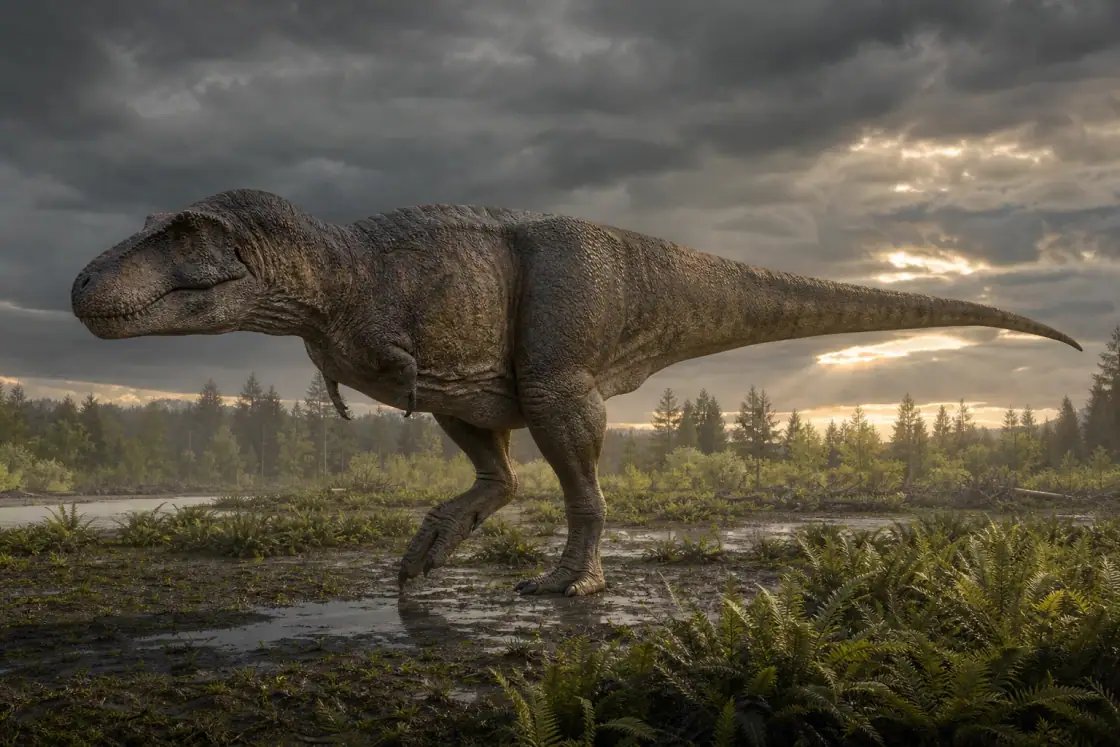
T. rex had scales on preserved patches of skin. Feathers have not been directly demonstrated on a T. rex fossil, but feathered relatives make some plumage plausible. A completely feathered adult and a completely featherless life history both go beyond the available evidence.
| Claim | Evidence | Scope |
|---|---|---|
| T. rex had scales | Preserved skin impressions | Sampled body regions |
| Yutyrannus had feathers | Preserved filaments | A different tyrannosauroid |
| Young T. rex had fuzz | Comparative reconstruction | Plausible, not directly preserved |
What does T. rex skin actually preserve?
Bell and colleagues described small scales from the neck, hip region and tail of the T. rex specimen nicknamed Wyrex in 2017. These are direct records of covering in particular body regions. They constrain reconstructions without providing a complete map of the animal’s skin.
Why do feathered relatives matter?
The 2012 description of Yutyrannus documented filamentous feathers in three large tyrannosauroid specimens from China. This shows that substantial size did not universally exclude feathers. Yutyrannus was a different animal from an earlier time, so its covering cannot simply be copied onto T. rex.
Did baby T. rex have feathers?
The American Museum of Natural History presents fuzzy hatchlings as a plausible reconstruction based on dinosaur relationships and the possible insulating role of feathers. It also distinguishes this prediction from a feather fossil belonging to T. rex. A depicted fluffy youngster is therefore a hypothesis, not a preserved coat.
How should artists show an adult T. rex?
An evidence-aware illustration can identify the regions where scales are known and label any added feathers as interpretive. Museum reconstructions may explore sparse display feathers, while the skin study argues against an extensive adult coat. These approaches differ in how they fill gaps; neither turns unpreserved detail into an observation.
What remains uncertain
The distribution of possible feathers, changes with age and the full appearance of living T. rex remain unresolved. Evidence from another tyrannosauroid is informative without being a direct T. rex specimen.
Related questions
Has a feathered T. rex fossil been found?
The sources cited here do not document feathers preserved on T. rex itself. Known feathered tyrannosauroids include Yutyrannus.
Does Yutyrannus prove every large tyrannosaur had feathers?
No. Its fossils establish its own covering. Related animals can retain or lose traits along different evolutionary branches.
Sources & further reading
Meet the species
Keep exploring
Did dinosaurs live with humans?
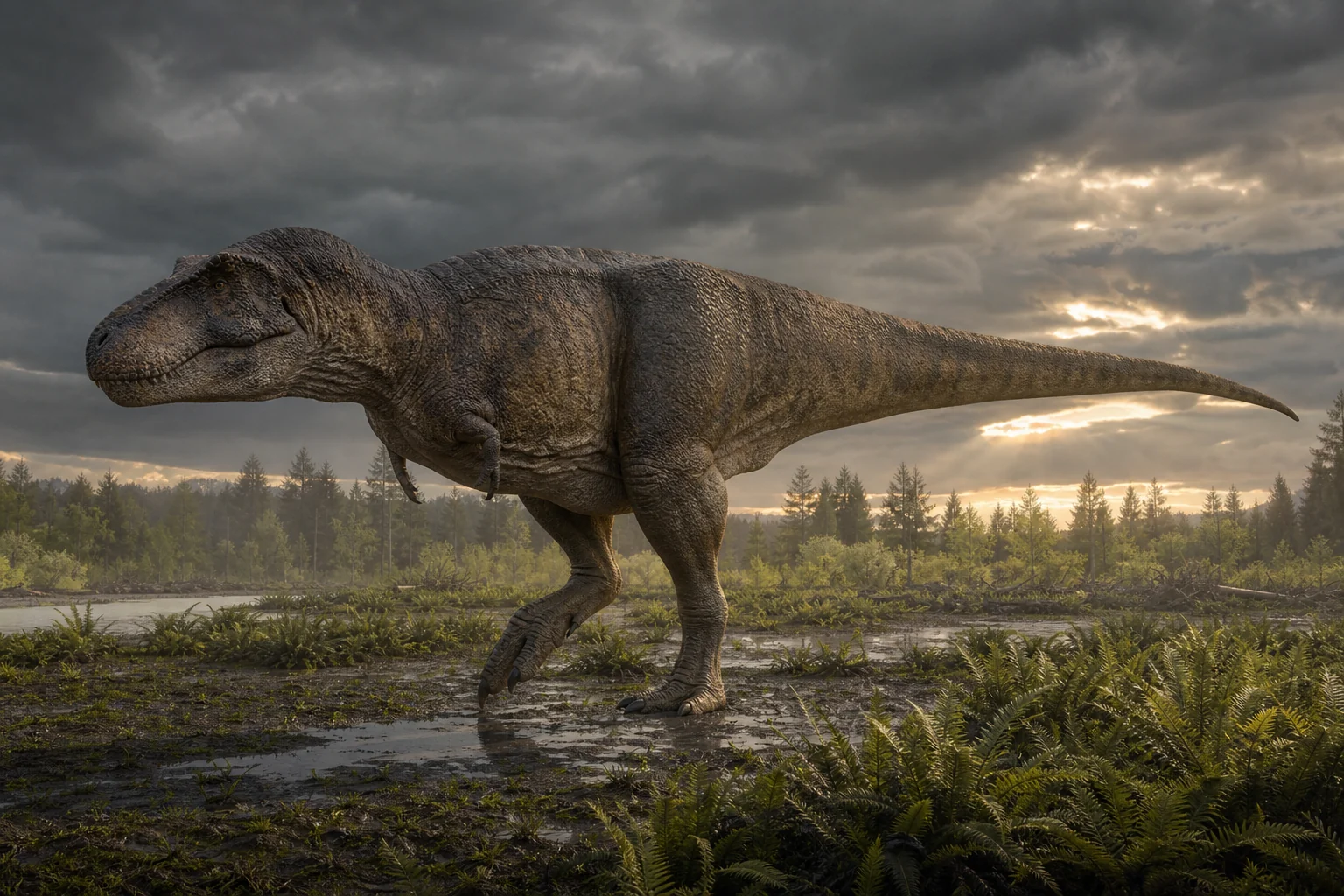
Humans never lived with non-avian dinosaurs such as Tyrannosaurus. Those dinosaurs disappeared about 66 million years ago, long before humans evolved. Birds are the surviving dinosaur lineage, however, so humans do live with dinosaurs in the scientific sense. The answer depends on whether the question includes birds.
Read the answer ↗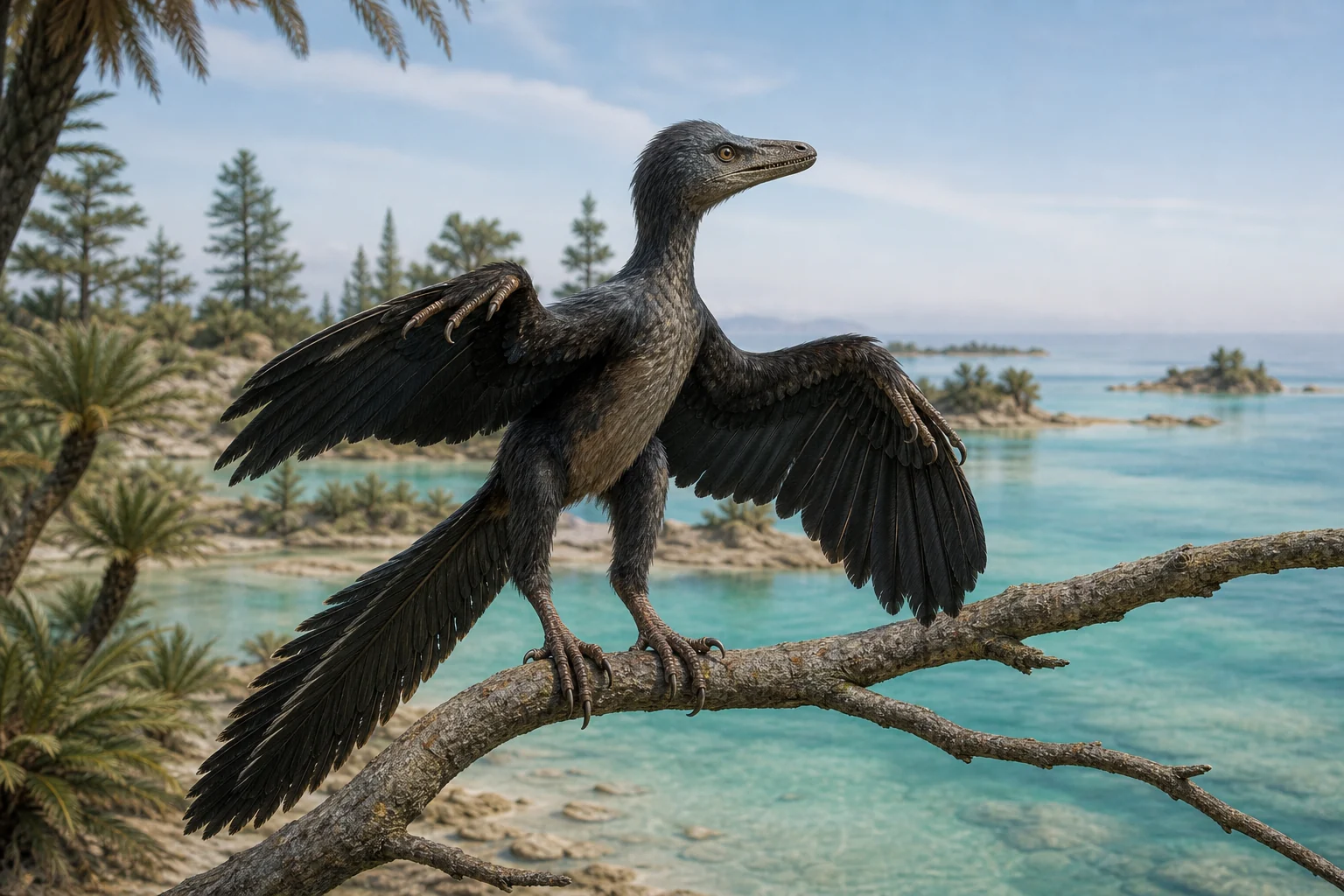
Why did birds survive the dinosaur extinction?
Birds are dinosaurs, and only some of their lineages survived the extinction about 66 million years ago. Small bodies, food options and less dependence on trees may have helped. Flight alone does not explain survival: many ancient birds disappeared too, and the relative importance of each factor remains debated.
Read the answer ↗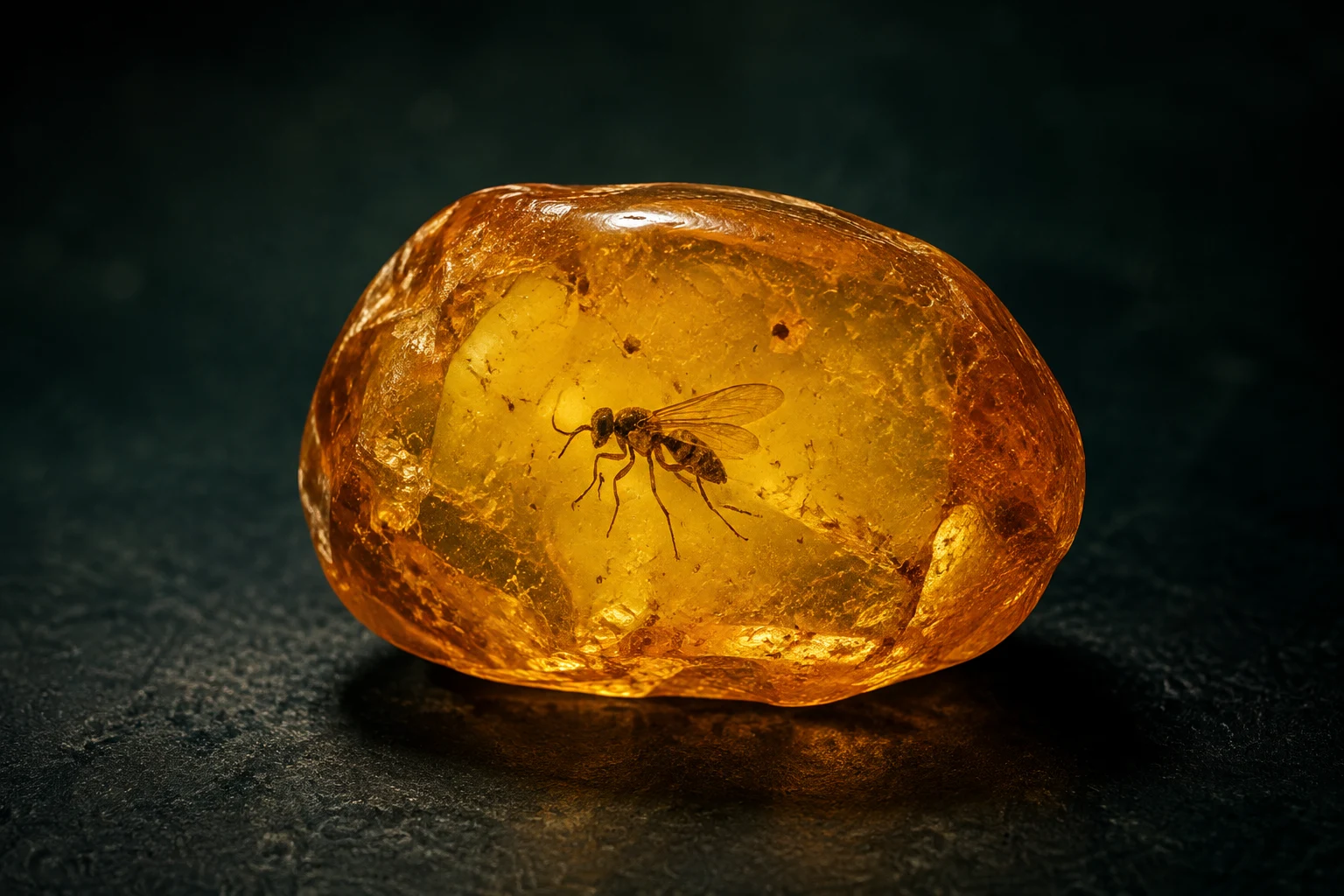
Could DNA from amber bring dinosaurs back?
No verified method currently provides a usable, complete non-avian dinosaur genome from amber. An insect can retain its shape after its DNA has degraded. Even a hypothetical complete sequence would not by itself provide the cells, embryo development and reproductive system needed to produce a living animal.
Read the answer ↗