
Explore this animal in Size of Extinct Animals ↗
200 / Cenozoic
Green-headed Ctenoplectrelline Bee
Ctenoplectrella viridiceps
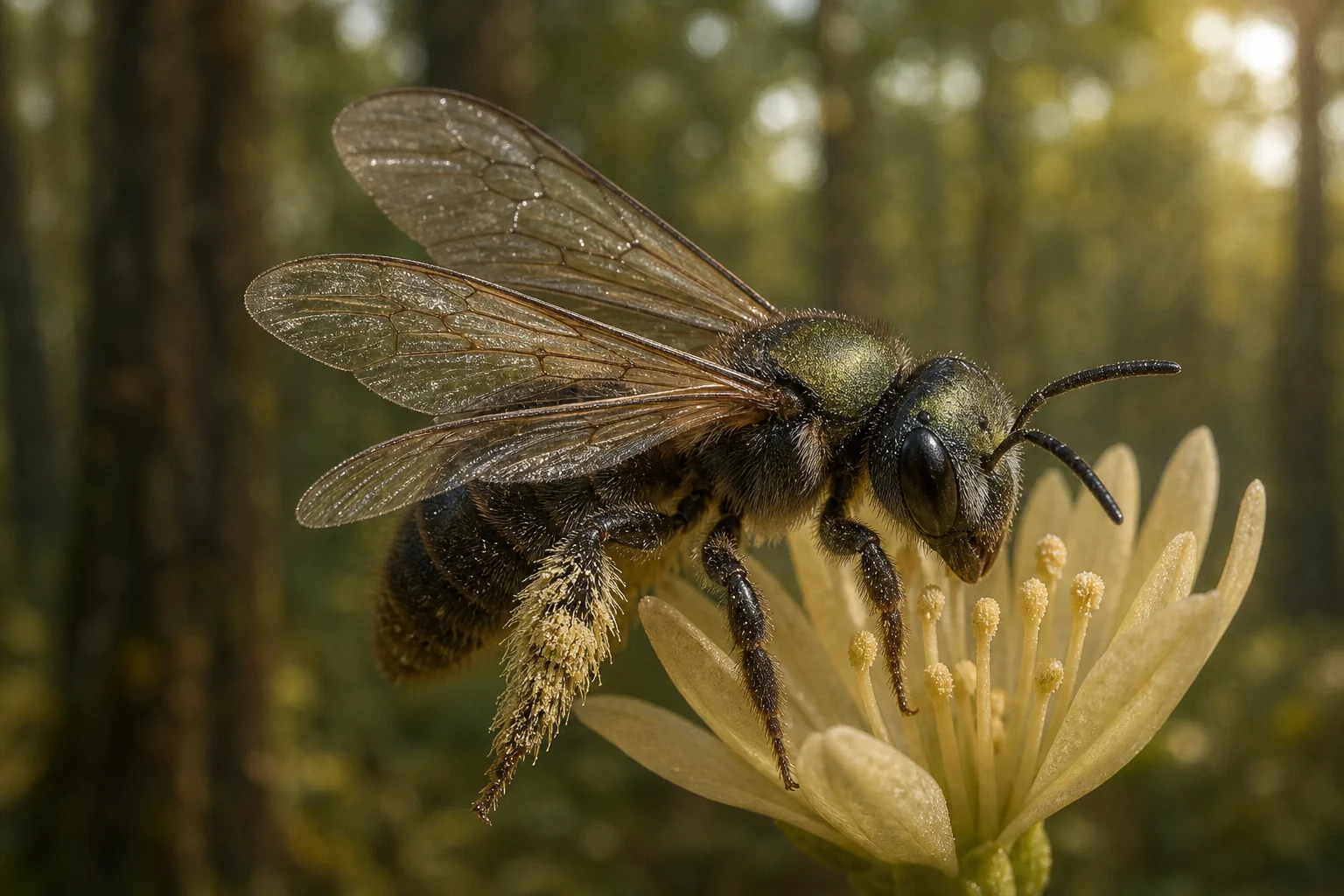
Amber sealed an extinct mason-bee relative whose long hind-leg hairs show that it actively collected and transported pollen.
 View original image · 1536 × 1024
- Time range
- About 47–41 million years ago
- Final stage
- Middle Eocene
- Geographic range
- Northern European resin forest · Baltic region
01 / DEFINITION & ECOLOGY
What was Green-headed Ctenoplectrelline Bee?
Green-headed Ctenoplectrelline Bee (Ctenoplectrella viridiceps) was an extinct organism known from About 47–41 million years ago, with a range in Northern European resin forest · Baltic region.
Life and ecology
Ctenoplectrella belonged to a distinctive Eocene bee tribe. Its venation and body proportions differ from most modern bees, while long hind-tibial hairs probably formed a pollen brush used among flowering plants of the warm Baltic forest.
02 / DISAPPEARANCE
Why did Green-headed Ctenoplectrelline Bee disappear?
The records linked here do not establish why Ctenoplectrella viridiceps disappeared. Amber documents its presence, but does not demonstrate that cooling or forest change caused its extinction.
03 / EVIDENCE
How do scientists know about Green-headed Ctenoplectrelline Bee?
Baltic amber preserves antennae, venation, body hairs and hind-leg pollen structures in three dimensions; revisions place it in an extinct megachiline lineage.
04 / SOURCES & FURTHER READING
Check the source record
Use the scientific name to compare taxonomy, occurrence records and the fossil record. Database coverage and classifications may differ.
05 / REVISION HISTORY
How has this record changed?
- Removed an unsupported extinction-cause attribution; the cause is not established by the linked records.
- Verified authoritative entity sources and added three responsive reconstruction sizes.
- Initial bilingual species record published.
06 / CORRECTIONS & ADDITIONS