
Prehistoric giants
Biggest Carnivorous Dinosaurs: Length vs Weight
Published · Editorial policy
The short answer
Spinosaurus and Giganotosaurus are leading candidates by length; large T. rex specimens are especially massive. The answer changes with the metric and the fossil individual.
| Dinosaur | Length reference | What to check |
|---|---|---|
| Spinosaurus | About 14 m | Reconstructed proportions |
| Giganotosaurus | About 13 m | Incomplete skeleton |
| Tyrannosaurus rex | Large specimens exceed 12 m | Robust build; specimen matters |
| Torvosaurus | Roughly About 10 m | Jurassic; separate species estimates |
Which dinosaur was longest?
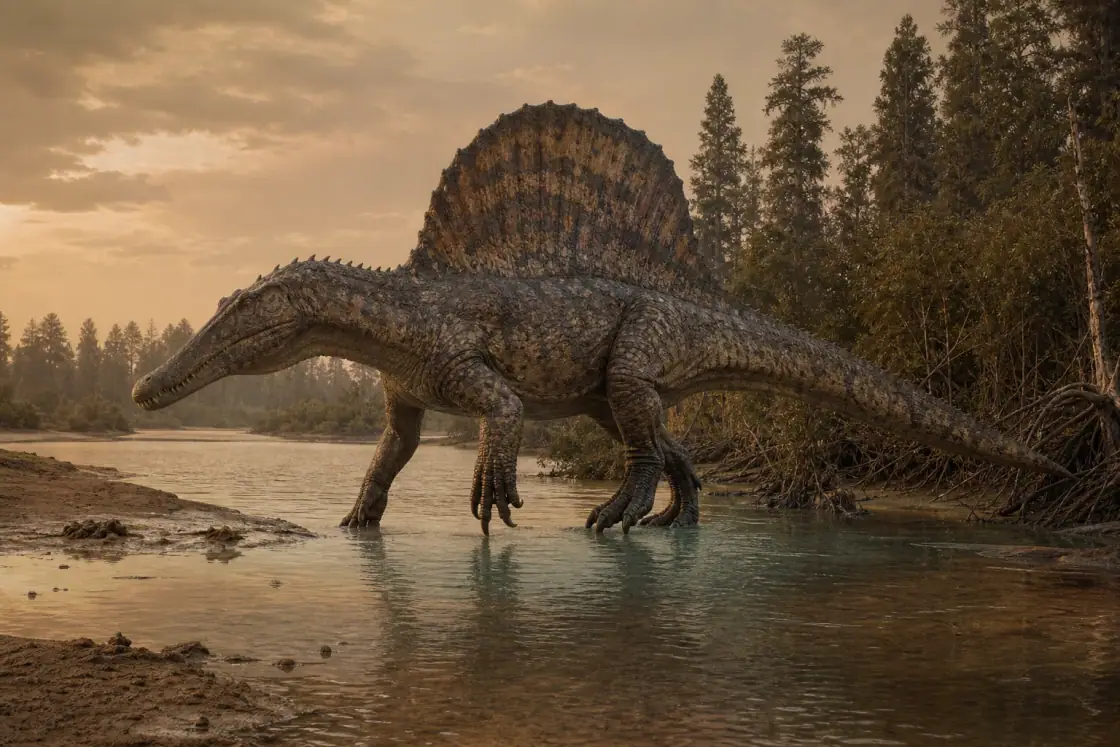
Museum reference lengths put Spinosaurus around 14 metres and Giganotosaurus around 13 metres. These are reconstructions, not exact measurements of complete living adults. Comparing a genus-level reference with the largest known individual of another genus can change the apparent ordering.
Why T. rex remains a heavyweight
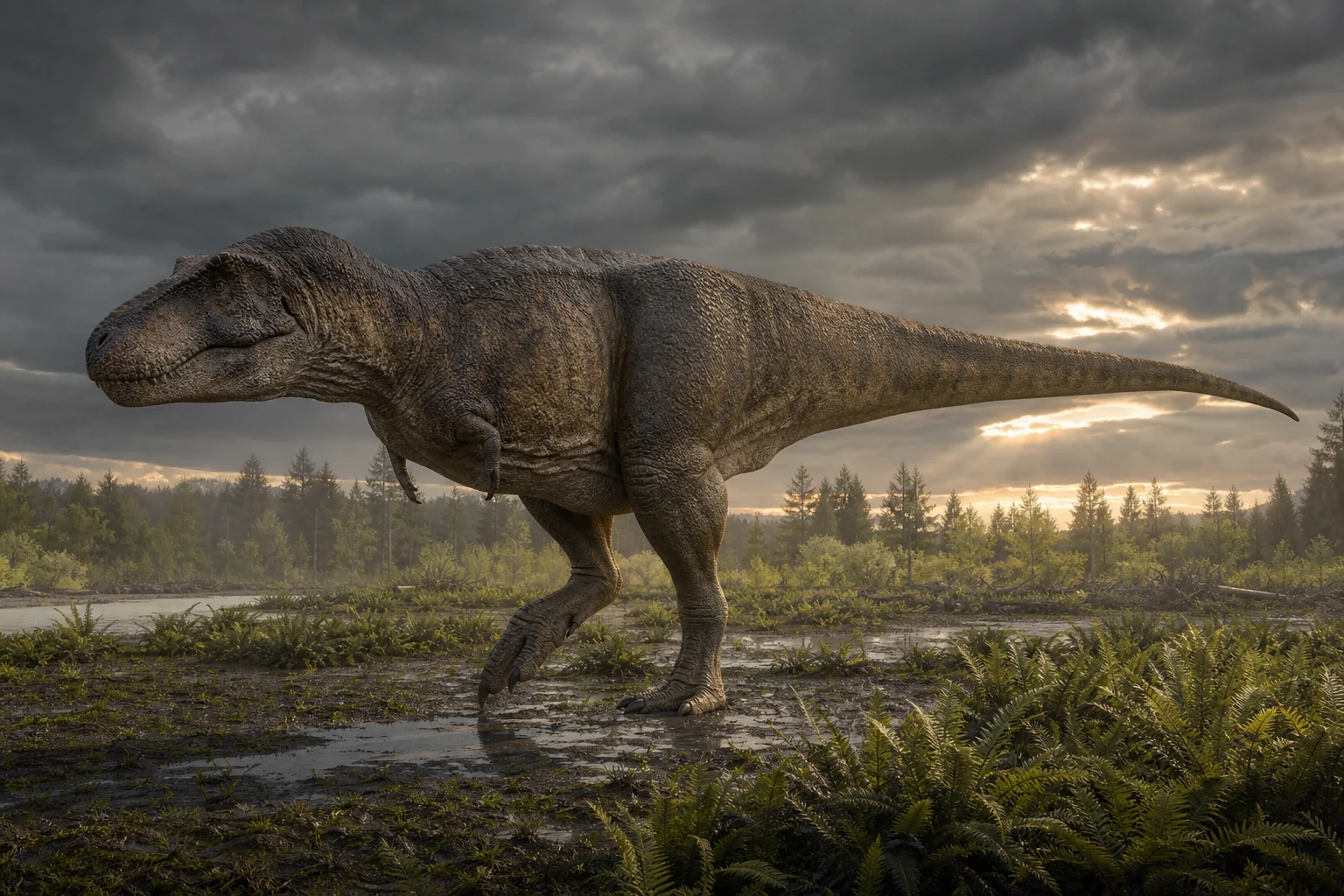
A long body can be relatively slender. T. rex combined a deep torso, powerful hindlimbs and a large head; SUE is a well-preserved example exceeding 40 feet in length. Establishing the heaviest theropod still requires compatible mass models and clearly identified specimens, rather than converting length directly into tonnes.
Jurassic giants belong in the comparison too
Torvosaurus shows that very large meat-eaters evolved before the Cretaceous giants. Its American T. tanneri and Portuguese T. gurneyi should be kept distinct. The Portuguese description gives a roughly 10-metre reconstruction; it does not make that value a direct measurement of every Torvosaurus.
How to read a biggest-dinosaur list
Start with the metric, then the specimen, then the method. A preserved bone length is an observation; a total length fills anatomical gaps; a mass estimate adds soft tissue and density assumptions. A longer animal is not automatically heavier, and uncertainty intervals can overlap.
What remains uncertain
This is a selected comparison, not an exhaustive or definitive top ranking. New specimens and revised body reconstructions can change the estimates.
Related questions
Was Spinosaurus bigger than T. rex?
Usually longer in common reconstructions, but that does not establish greater body mass.
Was the largest dinosaur a carnivore?
No. Giant sauropods exceeded the largest theropods in overall size and mass estimates.
Sources & further reading
Meet the species
Keep exploring
Did dinosaurs live with humans?
Humans never lived with non-avian dinosaurs such as Tyrannosaurus. Those dinosaurs disappeared about 66 million years ago, long before humans evolved. Birds are the surviving dinosaur lineage, however, so humans do live with dinosaurs in the scientific sense. The answer depends on whether the question includes birds.
Read the answer ↗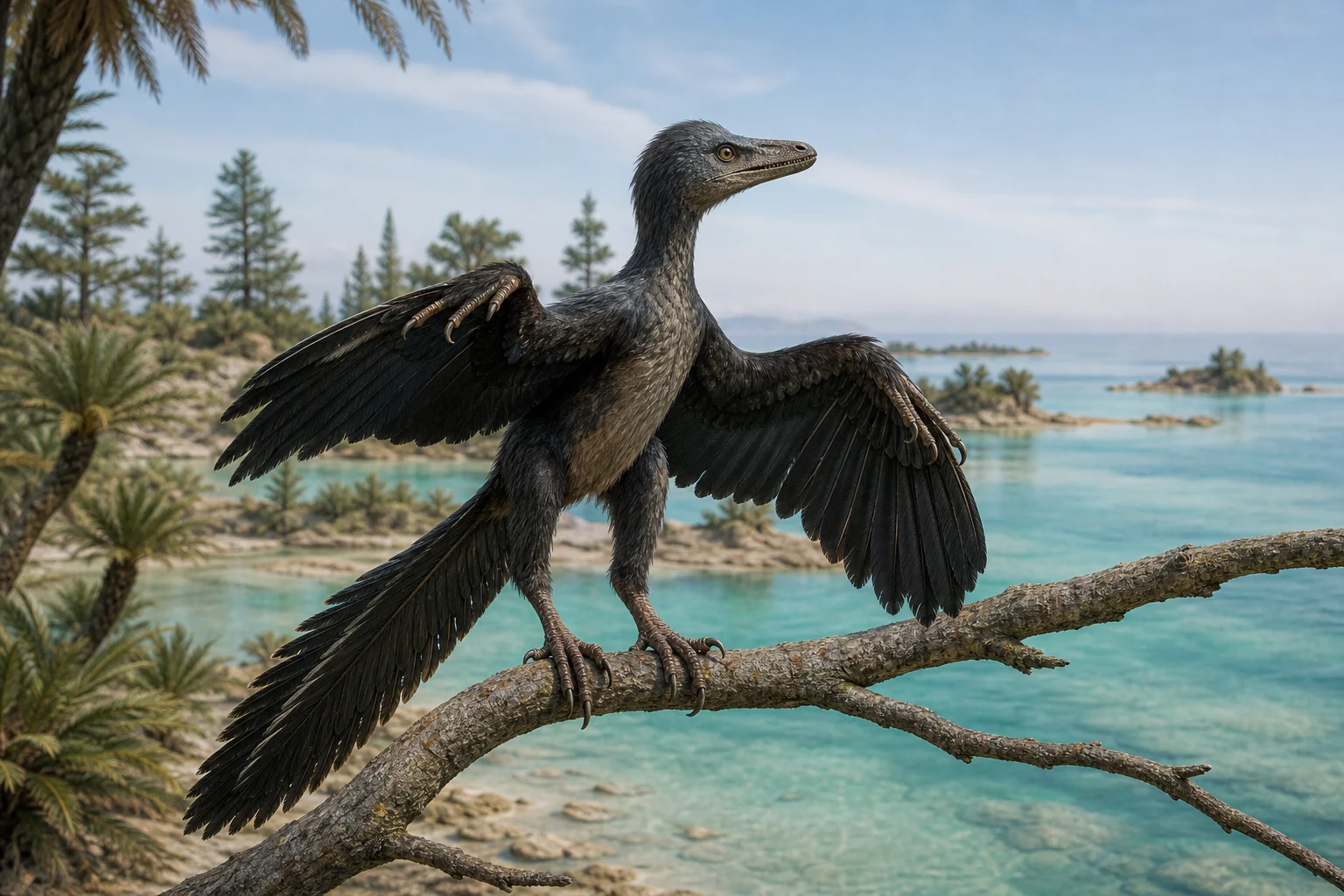
Why did birds survive the dinosaur extinction?
Birds are dinosaurs, and only some of their lineages survived the extinction about 66 million years ago. Small bodies, food options and less dependence on trees may have helped. Flight alone does not explain survival: many ancient birds disappeared too, and the relative importance of each factor remains debated.
Read the answer ↗
Could DNA from amber bring dinosaurs back?
No verified method currently provides a usable, complete non-avian dinosaur genome from amber. An insect can retain its shape after its DNA has degraded. Even a hypothetical complete sequence would not by itself provide the cells, embryo development and reproductive system needed to produce a living animal.
Read the answer ↗