
Humans & prehistoric life
Did dinosaurs live with humans?
Published · Editorial policy
The short answer
Humans never lived with non-avian dinosaurs such as Tyrannosaurus. Those dinosaurs disappeared about 66 million years ago, long before humans evolved. Birds are the surviving dinosaur lineage, however, so humans do live with dinosaurs in the scientific sense. The answer depends on whether the question includes birds.
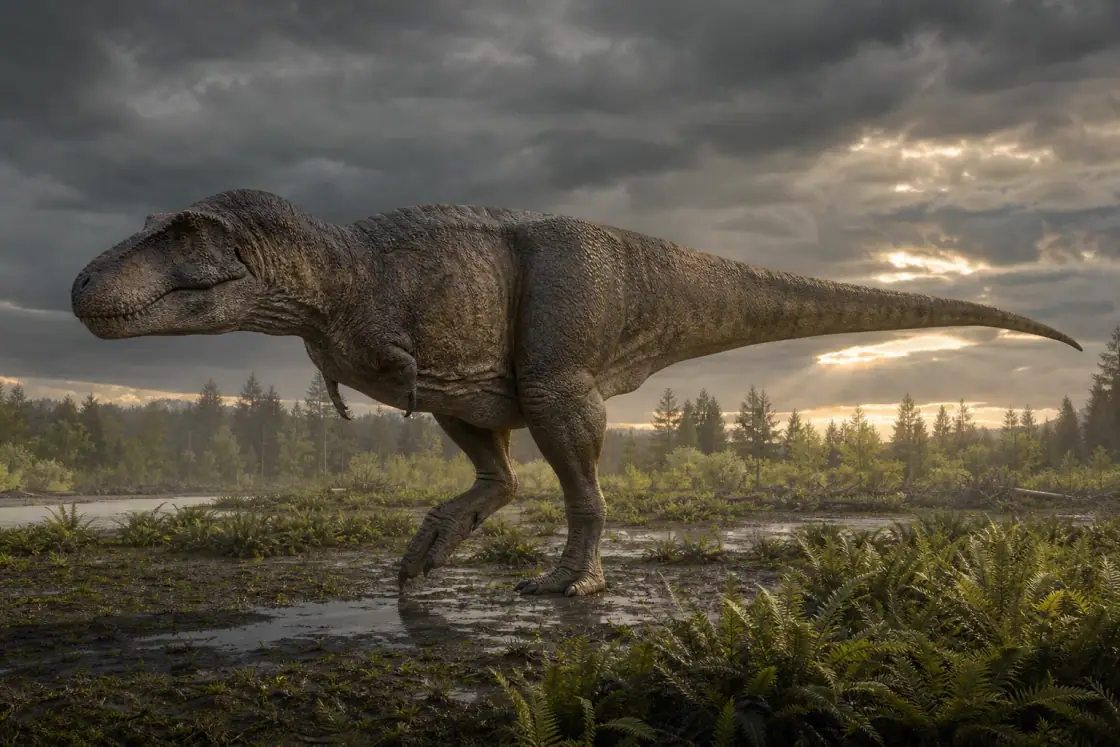
Put the two timelines on the same scale
The end-Cretaceous extinction occurred about 66 million years ago. Our own species, Homo sapiens, dates to roughly 300,000 years ago, while the broader evidence of human evolution spans only the last several million years. Even including earlier human relatives leaves an enormous gap. Saying that both humans and dinosaurs lived in prehistoric times obscures that difference: prehistory is not one shared moment, but an immense stretch of Earth's past.
How can scientists check the dates?
Fossils occur in rock layers whose relationships record an order of events. Scientists combine that relative sequence with numerical ages from suitable radioactive minerals. Human evidence belongs to much younger deposits than the final non-avian dinosaur fossils. Carbon dating is not the tool for a 66-million-year-old dinosaur: its useful range is measured in tens of thousands of years. Older rocks require isotope systems suited to much longer intervals.
Birds make the everyday answer more interesting
Modern birds belong within theropod dinosaurs. Fossils show that many features associated with birds developed among their dinosaur relatives, rather than appearing all at once in a separate group. A pigeon is therefore a living part of dinosaur history. This does not make every bird a miniature Tyrannosaurus, or mean the familiar extinct dinosaur groups survived. It means one branch continued evolving while the other dinosaur branches disappeared.
What remains uncertain
Individual fossil dates and evolutionary relationships can be refined as evidence improves. Those refinements do not bridge the tens of millions of years separating humans from non-avian dinosaurs. Birds should always be stated explicitly to avoid a misleading blanket answer.
Related questions
Was every large prehistoric reptile a dinosaur?
No. Dinosaur is a name for a particular evolutionary group, not a label for everything ancient, large or reptilian. Pterosaurs and marine reptiles belong to other groups. Classification follows ancestry rather than size or an animal's appearance.
Did chickens evolve from Tyrannosaurus rex?
No. Birds arose among smaller theropods; Tyrannosaurus belonged to another theropod branch. They share ancestry, but T. rex was not a chicken's direct ancestor. A branching family tree is more accurate than a ladder from tyrannosaur to chicken.
Sources & further reading
- Smithsonian National Museum of Natural History — The Last American Dinosaurs ↗
- Smithsonian Human Origins Program — Homo sapiens ↗
- Smithsonian Human Origins Program — Human Evolution Evidence ↗
- National Park Service — National Fossil Day: Frequently Asked Questions ↗
- National Park Service — Radiometric Age Dating ↗
- Natural History Museum — How dinosaurs evolved into birds ↗
- National Park Service — What Makes a Dinosaur a Dinosaur ↗
- Natural History Museum — Why are birds the only surviving dinosaurs? ↗
Meet the species
Keep exploring
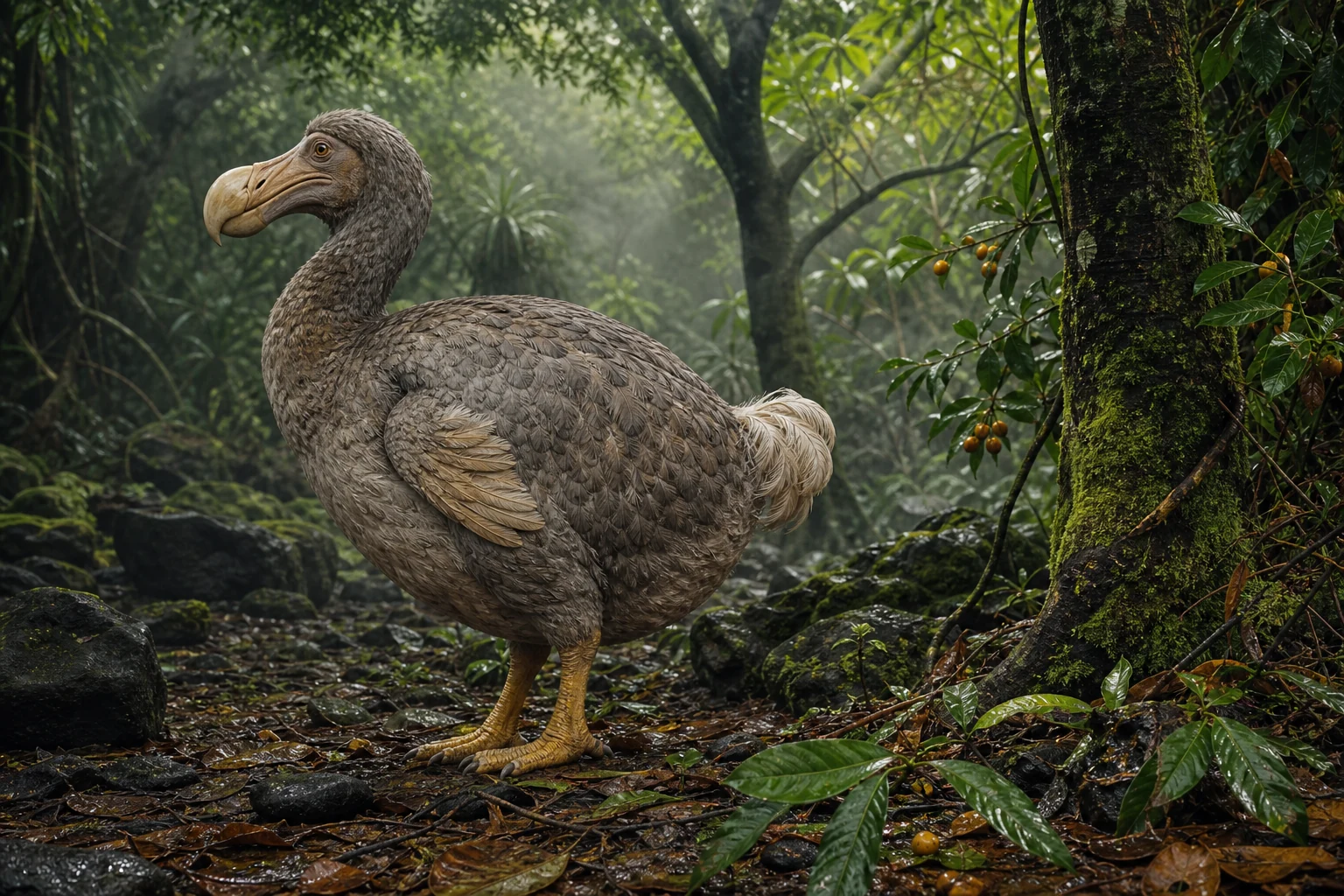
When and why did the dodo go extinct?
The last reliable sighting, uncertainty about the final date, hunting and introduced animals.
Read the answer ↗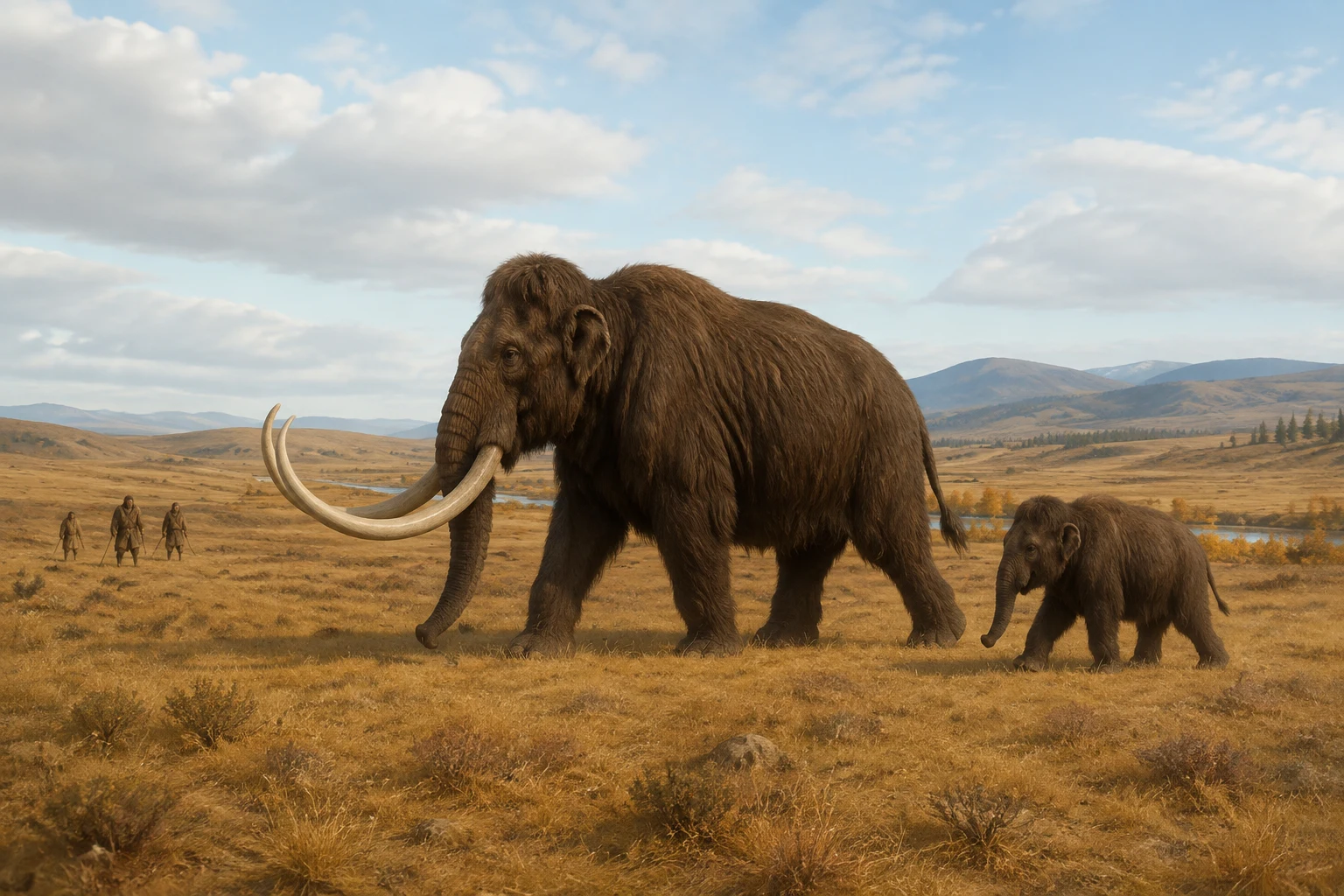
Did humans live with mammoths?
Yes. People shared Ice Age landscapes with mammoths and sometimes hunted them. Archaeological sites and prehistoric art document that relationship. Some isolated mammoth populations survived until about 4,000 years ago. Sharing a time period, however, does not mean people encountered every population or caused every local extinction.
Read the answer ↗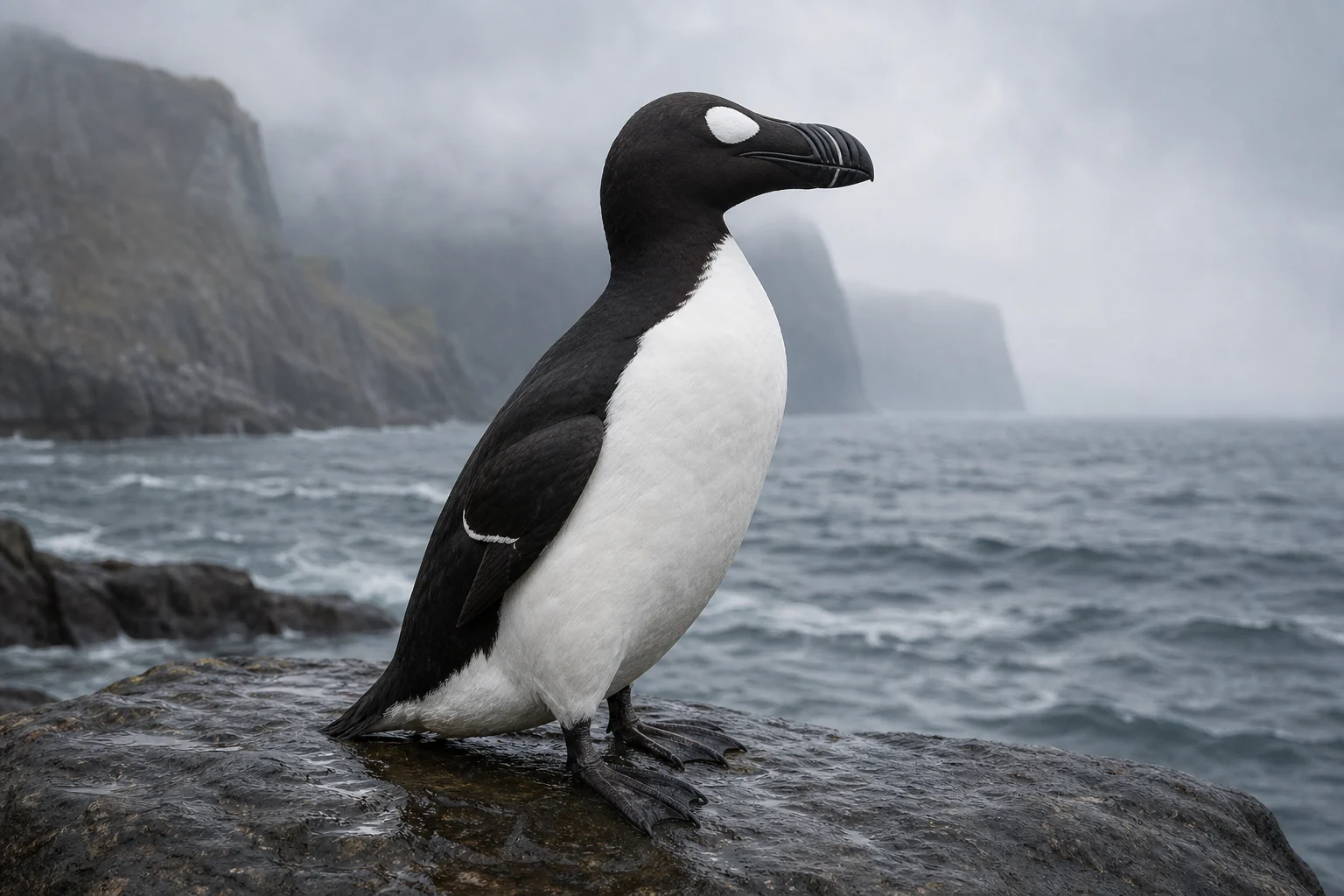
What animals went extinct because of humans?
Well-documented examples include the passenger pigeon, great auk, dodo and thylacine. Human pressure took different forms: commercial hunting, collecting, deliberate persecution, habitat change and introduced animals. These histories are most useful when compared by cause, rather than presented as a list in which every species was simply hunted away.
Read the answer ↗