
Humans & prehistoric life
Did humans live with mammoths?
Published · Editorial policy
The short answer
Yes. People shared Ice Age landscapes with mammoths and sometimes hunted them. Archaeological sites and prehistoric art document that relationship. Some isolated mammoth populations survived until about 4,000 years ago. Sharing a time period, however, does not mean people encountered every population or caused every local extinction.
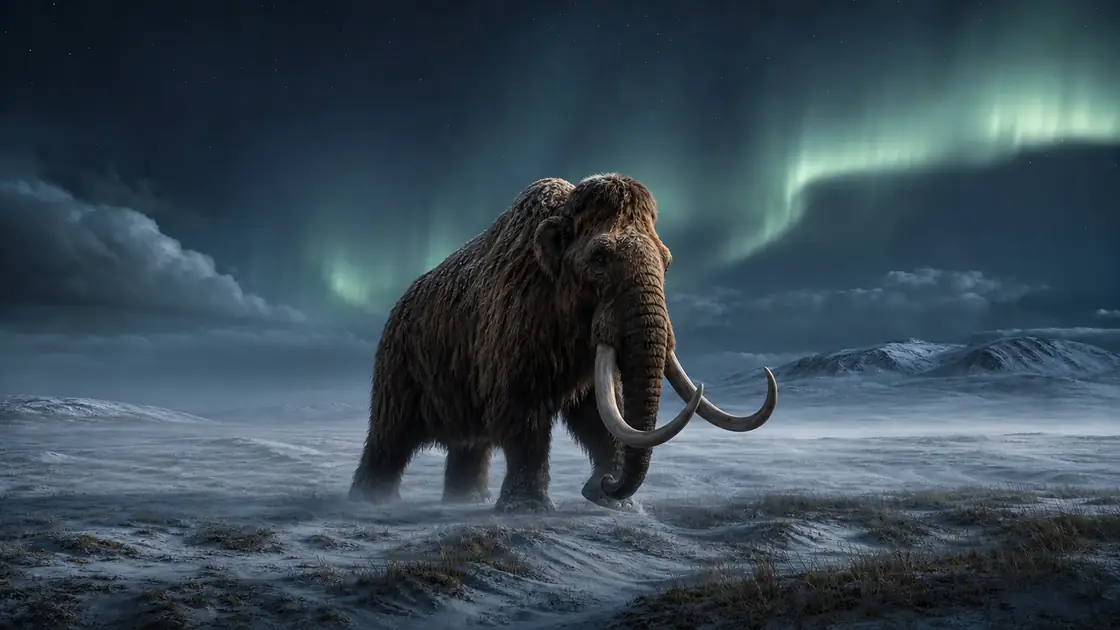
What evidence puts people beside mammoths?
In North America, Clovis sites preserve mammoth remains alongside distinctive stone tools. The National Park Service identifies mammoths among the large mammals hunted by Clovis people roughly 13,000 years ago. In Eurasia, mammoths also appear in prehistoric art, and some bones preserve broken weapon points. These are different kinds of evidence: a drawing records human attention, while a weapon embedded in bone provides a more direct trace of an encounter.
The last mammoths lived surprisingly recently
The end of mammoths was a sequence of regional disappearances. A 2024 genomic study describes woolly mammoths becoming isolated on Wrangel Island about 10,000 years ago and surviving there until around 4,000 years ago. That island population continued for thousands of years after mammoths had disappeared from much of their mainland range. A single extinction date therefore hides a long retreat: when asking who lived with mammoths, both the place and the population matter.
Coexistence does not settle the cause of extinction
St. Paul Island provides a useful counterexample to an all-hunting explanation. A study combining lake sediments and mammoth remains dated the local disappearance to about 5,600 years ago. Its evidence points to shrinking freshwater supplies, while human occupation came much later. The lesson is to separate two questions: whether humans could kill mammoths, and what actually ended a particular population. Evidence for the first cannot automatically answer the second.
What remains uncertain
The final cause of the Wrangel Island extinction remains unresolved. Genetic evidence shows long survival after a severe population bottleneck; it does not establish that inbreeding, hunting, or one particular disaster killed the last mammoths.
Related questions
Did humans use mammoths for more than food?
Yes. Mammoth bones, ivory and hides were useful materials, and mammoths also appeared in art. This wider relationship helps explain why mammoths mattered to prehistoric people beyond the outcome of individual hunts.
Do we know exactly what killed the last mammoths?
No. Research on Wrangel Island shows that its population persisted for many generations despite genetic problems. The final collapse remains unexplained, so a confident story about the last hunt or a single genetic defect goes beyond the evidence.
Sources & further reading
- National Park Service — Paleoindian ↗
- Natural History Museum — Were all mammoths woolly? ↗
- Dehasque et al. (2024), Cell — Temporal dynamics of woolly mammoth genome erosion prior to extinction ↗
- Graham et al. (2016), PNAS — Timing and causes of mid-Holocene mammoth extinction on St. Paul Island, Alaska ↗
- Swedish Museum of Natural History — Study of the woolly mammoth's final population (2024) ↗
Meet the species
Keep exploring
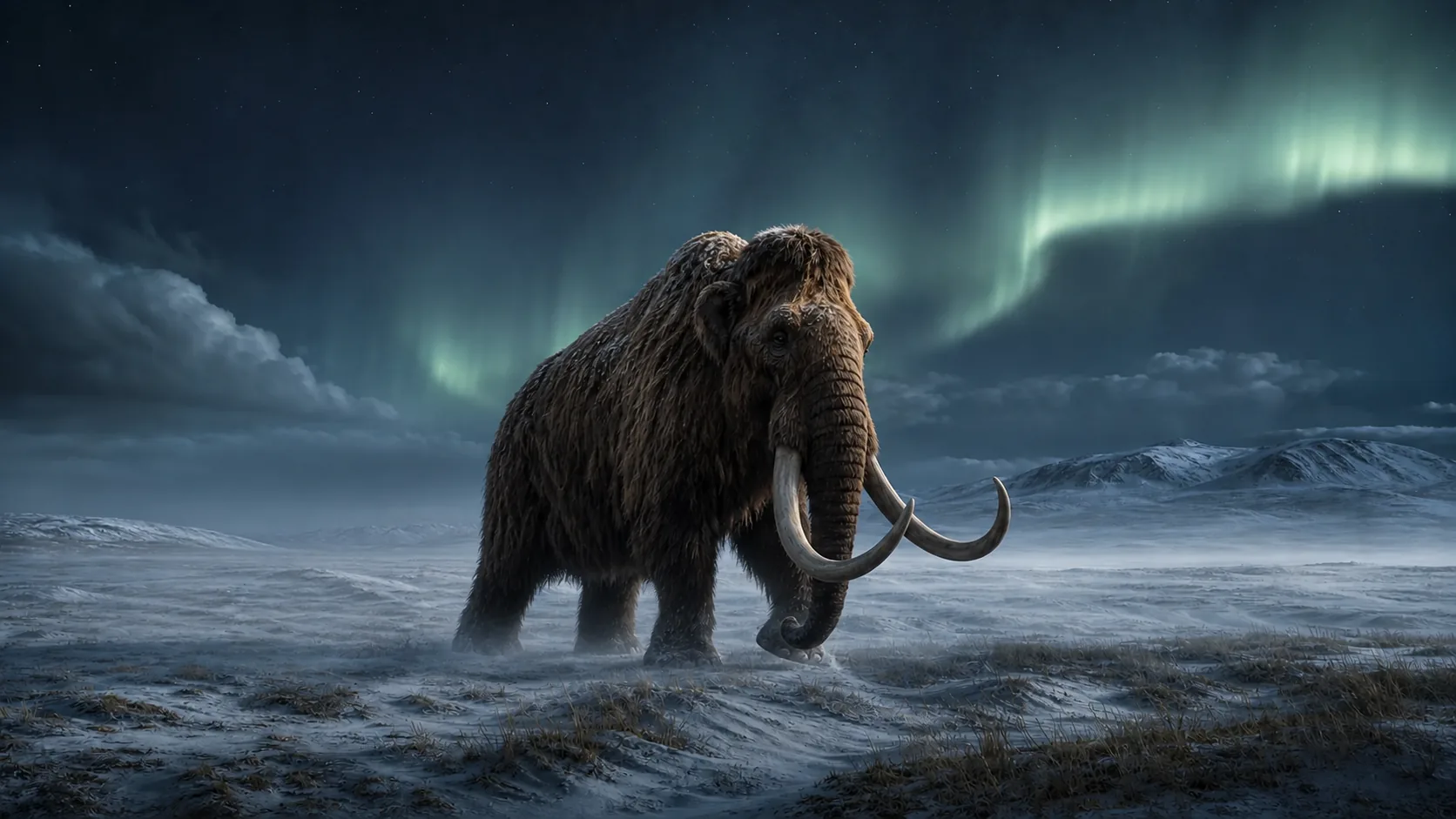
Why did woolly mammoths go extinct?
Climate, human pressure and the last island populations.
Read the answer ↗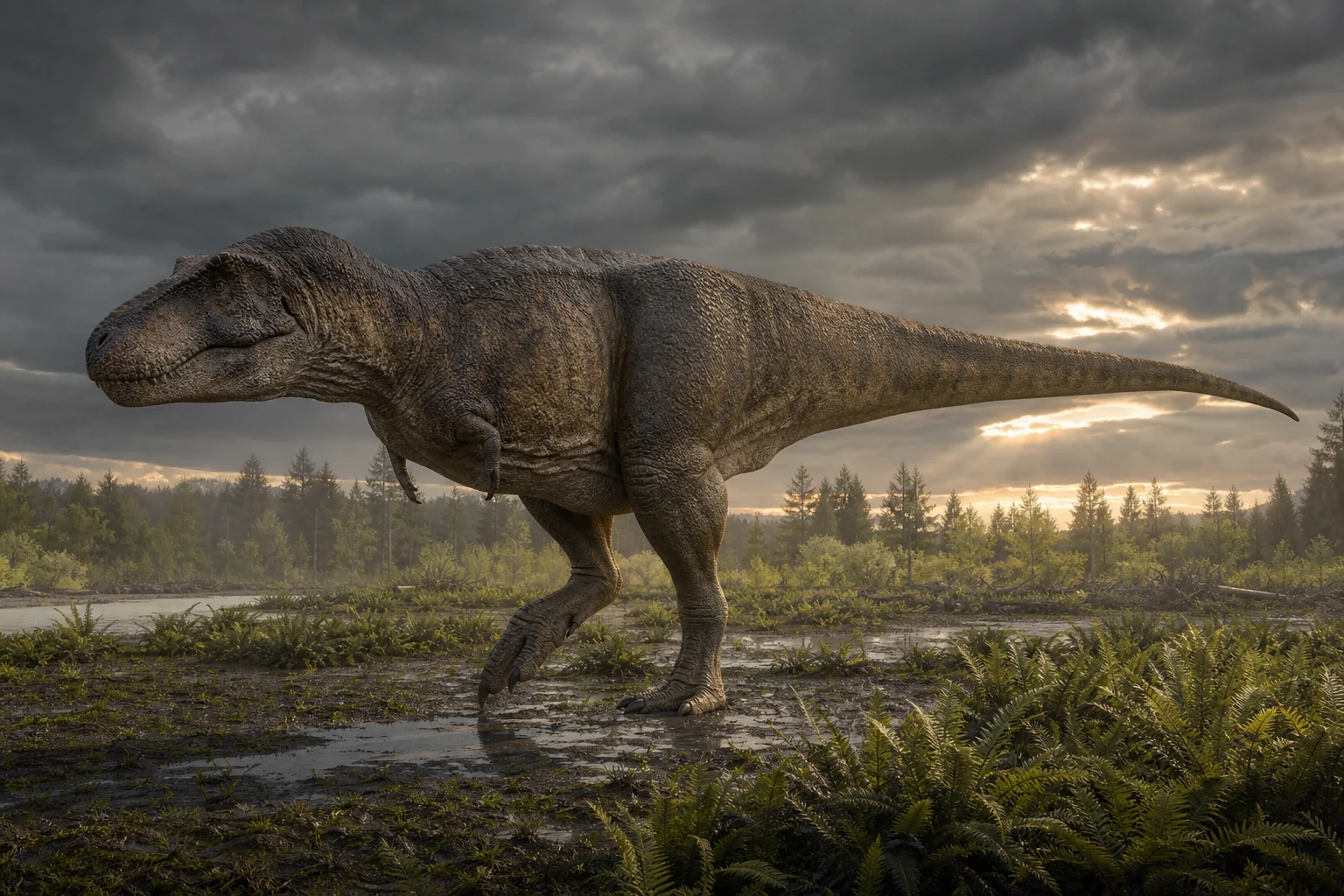
Did dinosaurs live with humans?
Humans never lived with non-avian dinosaurs such as Tyrannosaurus. Those dinosaurs disappeared about 66 million years ago, long before humans evolved. Birds are the surviving dinosaur lineage, however, so humans do live with dinosaurs in the scientific sense. The answer depends on whether the question includes birds.
Read the answer ↗
Can extinct animals be brought back?
Partly. Cloning can sometimes recover an individual from preserved cells, while breeding and gene editing can reconstruct selected traits. Neither achievement automatically restores an extinct species as a healthy, reproducing wild population.
Read the answer ↗