
Movement & speed
How Fast Could T. rex Run? Speed Estimates Explained
Published · Editorial policy
The short answer
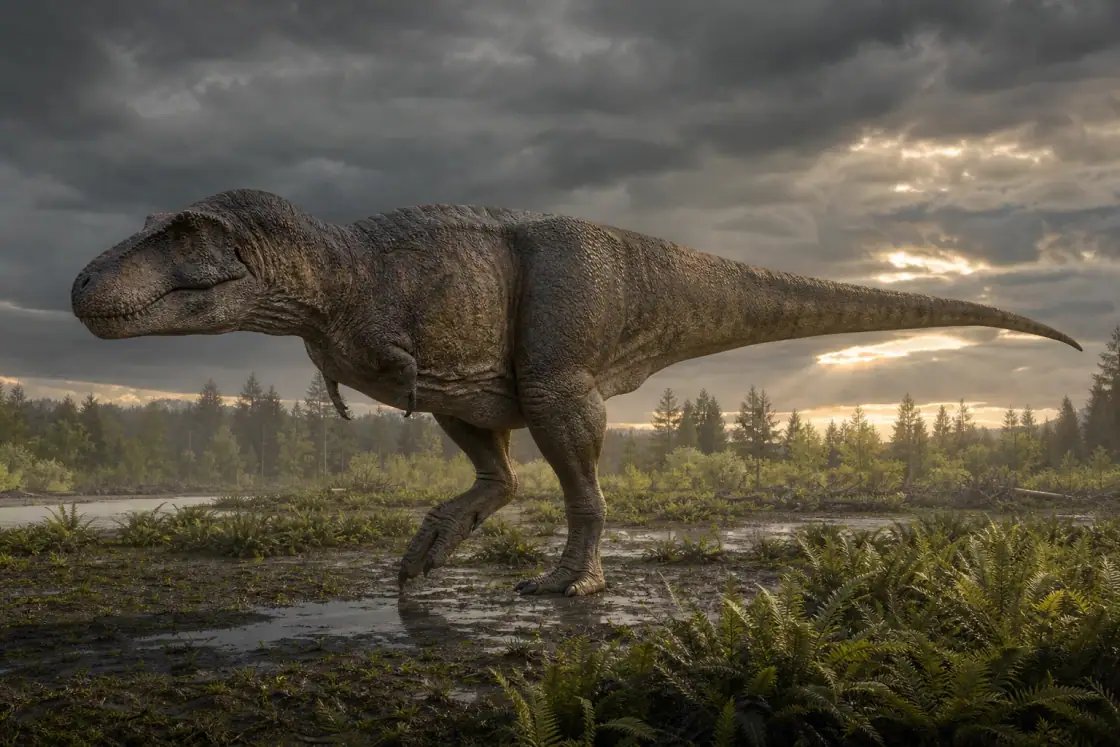
There is no agreed top speed for an adult T. rex. Studies of muscle requirements and bone stress challenge fast running. A separate 2021 model estimated a preferred walking speed of about 4.6 km/h (2.9 mph), which is not a sprint limit.
| Quantity | Estimate or result | Interpretation |
|---|---|---|
| Preferred walk, 2021 | 4.6 km/h · 2.9 mph | Modelled comfortable travel |
| Walking model range | 2.9–5.9 km/h · 1.8–3.7 mph | Sensitivity to assumptions |
| True running, 2017 | Excessive skeletal loads in the model | A mechanical constraint |
| Maximum adult speed | Unresolved | Not the preferred walking value |
Why do T. rex speed estimates differ?
A fossil skeleton constrains limb dimensions, but a moving animal also needs muscles and a workable gait. Hutchinson and Garcia’s 2002 model tested how much supporting muscle fast running would require. For an adult T. rex, the necessary muscle mass was implausibly large under their assumptions.
Could an adult T. rex use a running gait?
Sellers and colleagues combined movement simulation with skeletal stress in 2017. Their model found that true running would place excessive loads on the legs and favoured walking gaits. That conclusion concerns the modelled adult and its mechanical limits; it is not a stopwatch measurement of every individual.
What does the 4.6 km/h estimate mean?
The 2021 Natural Frequency Method used the reconstructed tail’s oscillation to estimate a comfortable walking rhythm. Its central result was 1.28 m/s, with a model range of 0.80–1.64 m/s. Converted, those are about 4.6 km/h (2.9 mph) and 2.9–5.9 km/h (1.8–3.7 mph). They describe preferred walking, not maximum running.
Could a human outrun T. rex?
A fair comparison needs the same quantity on both sides: preferred walking, a short sprint or sustained travel. Comparing a human sprint with the dinosaur’s preferred walk would answer the wrong question. The studies above constrain different aspects of movement and do not settle a human-versus-T. rex race.
What remains uncertain
Body reconstruction, soft tissues and gait assumptions affect the results. Keep comfortable walking separate from maximum speed, and avoid presenting a single model as a measured species-wide limit.
Related questions
Was 2.9 mph the maximum speed of T. rex?
No. It is the approximate preferred walking speed from the 2021 tail-frequency model.
Why are long legs not enough to prove fast running?
The legs must also withstand repeated loads. The 2017 analysis evaluated that constraint alongside movement rather than using limb length alone.
Sources & further reading
Meet the species
Keep exploring
Did dinosaurs live with humans?
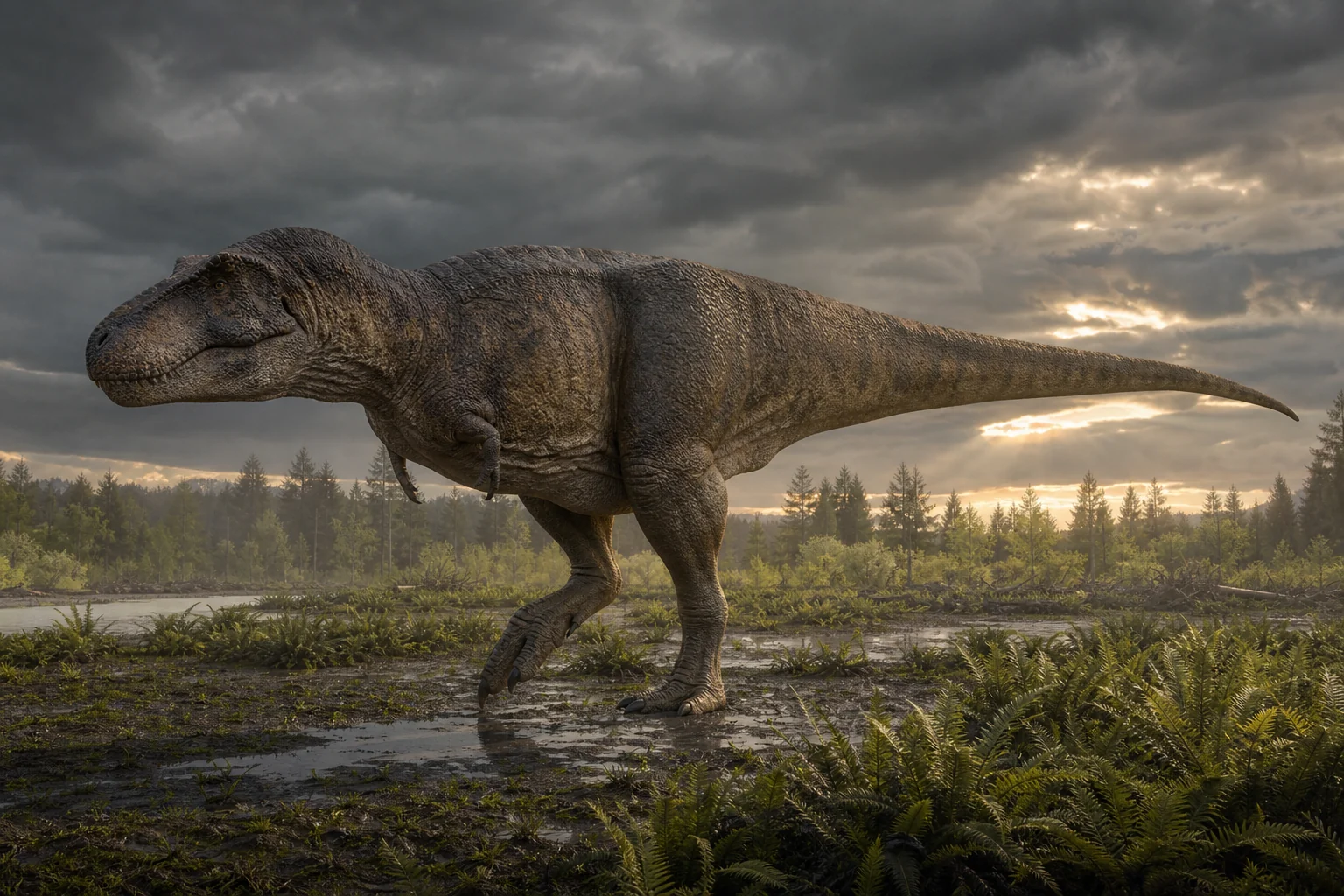
Humans never lived with non-avian dinosaurs such as Tyrannosaurus. Those dinosaurs disappeared about 66 million years ago, long before humans evolved. Birds are the surviving dinosaur lineage, however, so humans do live with dinosaurs in the scientific sense. The answer depends on whether the question includes birds.
Read the answer ↗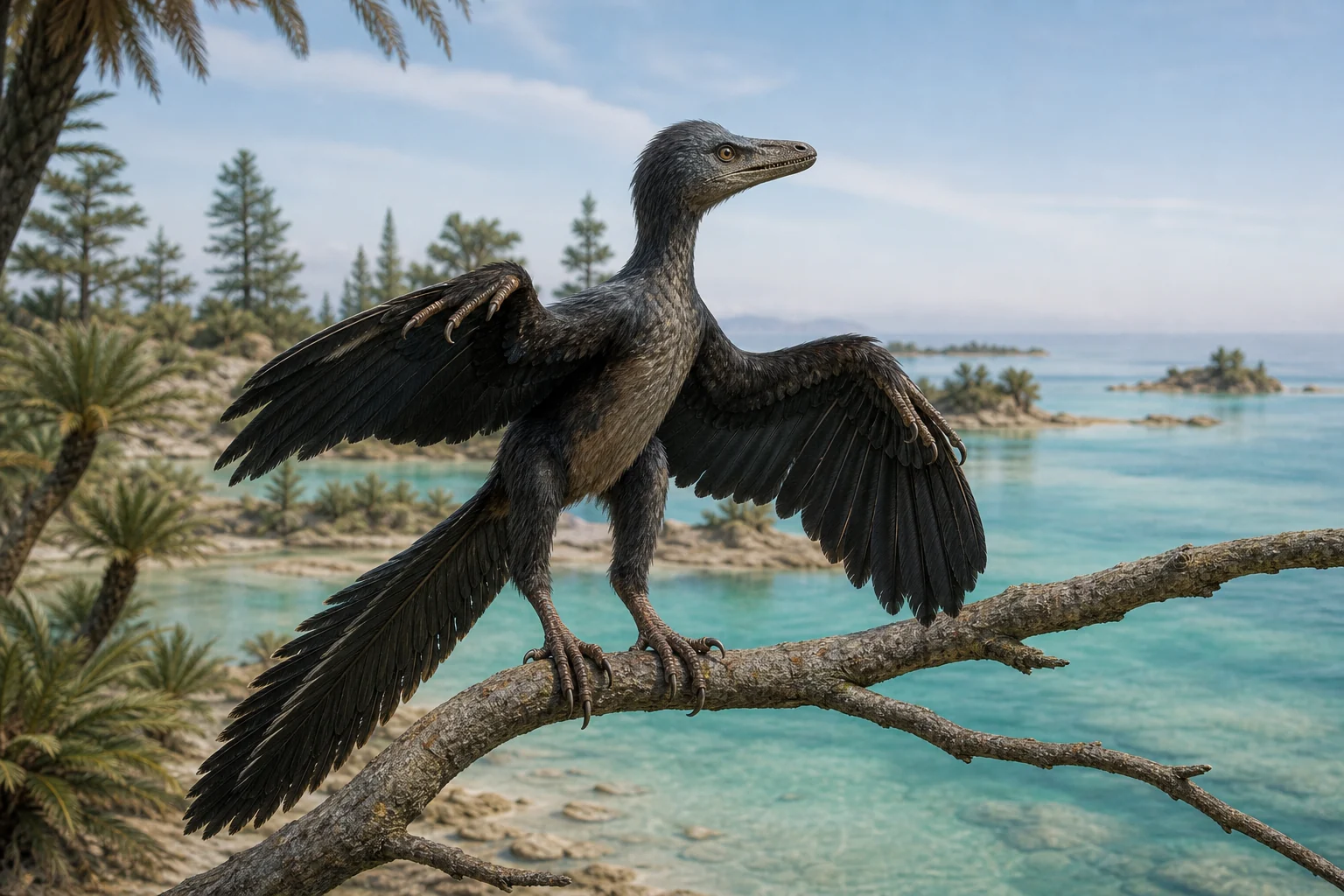
Why did birds survive the dinosaur extinction?
Birds are dinosaurs, and only some of their lineages survived the extinction about 66 million years ago. Small bodies, food options and less dependence on trees may have helped. Flight alone does not explain survival: many ancient birds disappeared too, and the relative importance of each factor remains debated.
Read the answer ↗
Could DNA from amber bring dinosaurs back?
No verified method currently provides a usable, complete non-avian dinosaur genome from amber. An insect can retain its shape after its DNA has degraded. Even a hypothetical complete sequence would not by itself provide the cells, embryo development and reproductive system needed to produce a living animal.
Read the answer ↗